Last updated 2026-07-26
TL;DR
In Virginia, a private event serving or selling alcohol usually needs a Virginia ABC Banquet License (for a one-time event) or a Mixed Beverage Special Events license, not a full annual on-premise license. Confirm the exact fee, timeline, and category with Virginia ABC before you sign a venue contract or advertise the event.
Do you need a VA ABC license for a private event?
If alcohol will be served, sold, or even given away at an event that isn't happening inside an already-licensed bar or restaurant during its normal licensed hours, the answer is almost always yes. Virginia treats alcohol service at weddings, fundraisers, festivals, corporate parties, and one-off tastings as activity that needs its own authorization from the Virginia Alcoholic Beverage Control Authority (Virginia ABC), separate from any license the venue itself might hold. The two most common paths for a private event are the Banquet License and the Mixed Beverage Special Events License, both issued under Virginia's ABC licensing statutes. A Banquet License generally covers a private party, wedding reception, or similar gathering where alcohol is served but not sold directly by the drink to the general public. A Mixed Beverage Special Events license is aimed at nonprofit or civic organizations selling mixed drinks at a specific event, like a festival or fundraiser, over a limited number of days. Which one you need depends on who is hosting, whether money changes hands for individual drinks, and whether the event is open to the public or private and invitation-only. This is exactly the kind of distinction where a five-minute call to your regional Virginia ABC licensing office saves you from applying for the wrong permit and having to start over close to your date.
What is a Virginia ABC banquet license and who needs one?
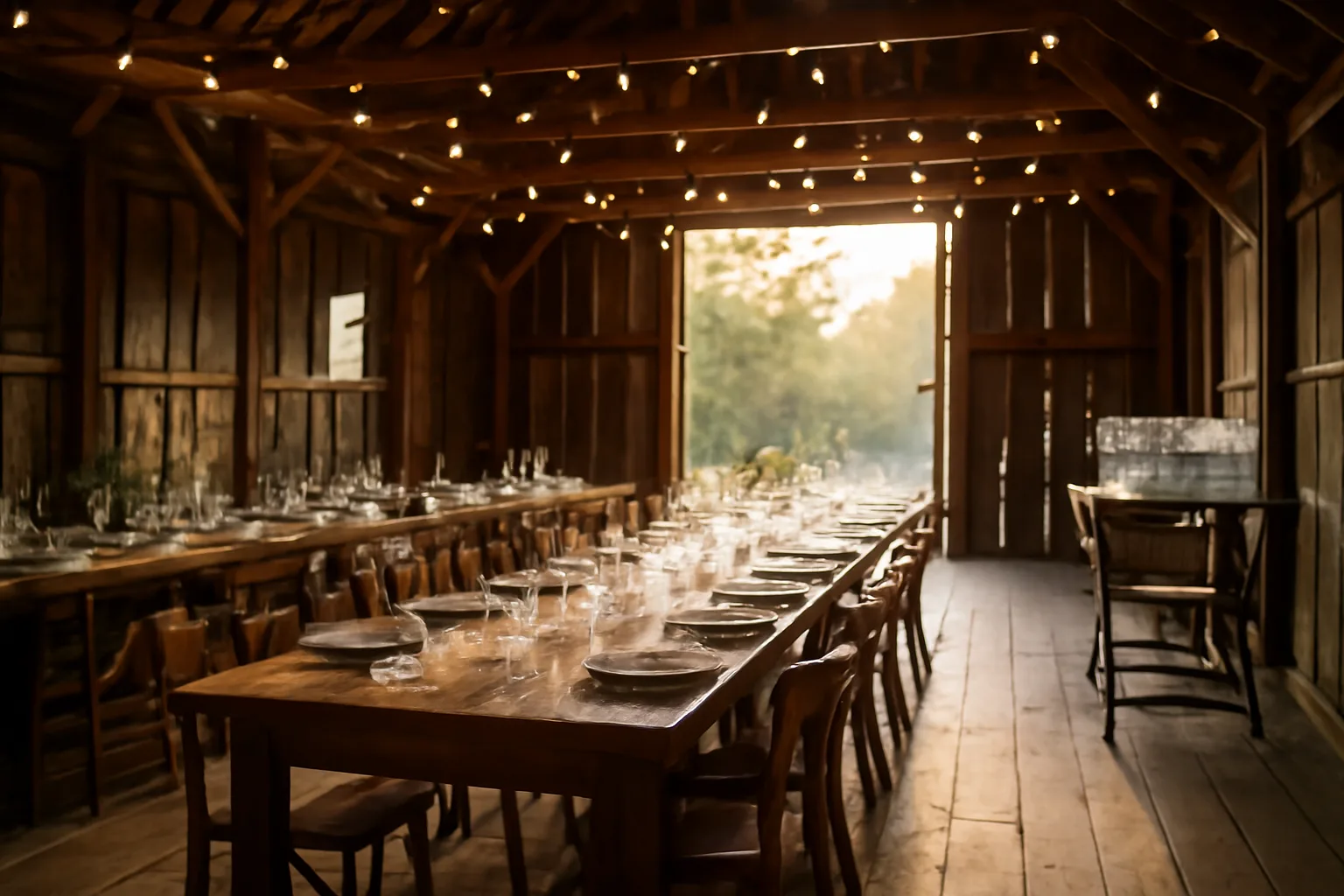
A Virginia ABC banquet license authorizes the sale or service of alcoholic beverages at a private gathering, typically for a single day or a short defined period, at a location that doesn't already carry a permanent on-premise license covering that use. Common banquet license users include wedding parties renting a barn, farm, or event hall with no existing liquor license, private clubs hosting an outside group's event, and corporations renting unlicensed space for a holiday party. Virginia ABC's regulations spell out categories of banquet licenses, including options tied to a single date and options for organizations that host a series of events across a year [1]. If your venue already holds its own on-premise beer, wine, and mixed beverage license and your event falls within that venue's normal license privileges, you may not need a separate banquet license at all, the venue's existing license may cover it. That is a question for the venue operator and, if there's any doubt, for Virginia ABC directly. The application generally requires basic event details: date, location, expected attendance, who is legally responsible for the alcohol, and sometimes proof of the venue owner's consent. Processing time varies with volume at your local ABC office and the completeness of your paperwork, so treat any stated timeline as a floor, not a guarantee.
How much does a Virginia ABC banquet or special event license cost?
Virginia ABC publishes its license and permit fee schedule, and banquet and special event fees are generally lower than the fees for a permanent on-premise retail license, since they cover a single event or a short window rather than a full year of operation [2]. Because fee schedules change and vary by license subtype (single event versus a set of dates, beer-and-wine-only versus mixed beverage), do not rely on a number you saw in a forum post or an old blog. Confirm the exact current fee for your specific license type directly with Virginia ABC before budgeting [2]. Beyond the state fee itself, budget for what actually drives most private-event alcohol costs: liquor liability insurance (often required by the venue or by Virginia ABC as a condition of the permit), any local permit or health department requirements, and the cost of hiring TIPS-certified or otherwise trained servers if you're not doing self-service. A few hundred dollars in state fees is usually the smallest line item in the whole event budget once insurance and staffing are added. If you're planning a recurring event series, a permanent bar or restaurant license may end up cheaper per event than repeated banquet permits, and Virginia ABC can walk through which license category actually fits a repeating event calendar.
How far in advance should you apply for a VA ABC event license?
Apply as soon as your event date and venue are locked, ideally 60 to 90 days out, and never assume a rush application close to the date will get approved in time. Virginia ABC does not publish a guaranteed turnaround time for banquet or special event applications, and processing can be affected by background checks, venue compliance history, and how busy the regional office is during wedding season or holiday months. A reasonable planning sequence looks like this: lock the venue and date, confirm with the venue whether their existing license covers your event or whether you need your own banquet permit, gather your event details and any required local approvals, then submit to Virginia ABC with enough runway that a request for more information doesn't blow your timeline. If your event involves outside vendors selling drinks, or if it's open to the general public rather than private and invitation-only, build in extra time, those applications tend to draw more scrutiny. Don't advertise ticket sales or publicize the event as "cash bar" or "open bar" before your license is actually approved. If the permit gets delayed or denied, you don't want to be unwinding public promises.
How much is a liquor license in Virginia generally, outside of a one-time event?
For a permanent, year-round license (a restaurant wine and beer license, a mixed beverage restaurant license, or a full retail on-premise license), Virginia ABC's fee structure is separate from the one-time banquet and special event fees discussed above, and fees vary by license type, by whether it's your first year or a renewal, and sometimes by the size or seating capacity of the business [2]. Virginia ABC's official fee schedule is the only source that should guide your budget, since third-party estimates go stale fast [2]. As a rough frame: annual on-premise retail license fees in most states run from a few hundred dollars up into the thousands depending on license class, and Virginia's structure follows that general pattern, but the exact dollar figure for your specific license class needs to come straight from Virginia ABC's current fee schedule, not a guess. If you're comparing a one-time banquet permit against opening with a full annual license because you're planning multiple events a year, run the math on your actual expected event count against both fee schedules before committing. This is also where state comparisons get useful. Every state runs its own system, its own quota rules, and its own fee schedule, so if you operate across state lines or you're deciding where to locate a new concept, it pays to check the liquor landscape state by state rather than assuming Virginia's rules carry over anywhere else.
How much is a liquor license in Florida, for comparison?
Florida runs a quota-based system for many of its liquor licenses, meaning the number of full liquor licenses (called "quota licenses") available in a county is capped based on county population, and new licenses beyond that quota are only available when the state issues them through a lottery or when an existing quota license is transferred on the open market [3]. That transfer market is where Florida license prices get high: quota license transfers in dense counties have sold for tens of thousands to well over a hundred thousand dollars, driven purely by scarcity, not by any state fee. By contrast, Florida's direct state application and license fees themselves (paid to the Florida Division of Alcoholic Beverages and Tobacco) are far smaller, generally in the hundreds to low thousands of dollars depending on license series and county population bracket [3]. The big cost in Florida almost never shows up on a government fee schedule, it shows up in what you pay a private seller for an existing quota license. So when someone asks "how much is a liquor license in Florida" or "how much is a liquor licence in Florida," the honest answer is: it depends entirely on whether you can get a new quota license directly from the state (cheap, but rare and subject to a lottery in many counties) or whether you have to buy one on the transfer market (expensive, market-driven, and requiring its own transfer approval process). Confirm current quota status and fee brackets with Florida's Division of Alcoholic Beverages and Tobacco before assuming either number applies to you [3]. For readers researching Florida specifically, our florida bar guide breaks down that quota system in more depth.
Can you serve alcohol at a private event without a liquor license?
In most cases, no, not legally, even if the event is invitation-only and nobody pays for individual drinks. Virginia, like nearly every state, regulates alcohol service based on whether alcohol is being furnished at a gathering, not strictly on whether cash changes hands for each drink. A private host serving alcohol at a home with no admission charge and no alcohol sales is generally in different legal territory than someone renting a venue, charging admission, or running a cash bar, and Virginia ABC's licensing requirements are built around exactly that distinction. The safest read: if the event is at a private residence, hosted personally, with no ticket price tied to alcohol access, you likely don't need a state license (though local ordinances can still apply). If the event is at a rented venue, has paid admission, involves a cash bar, or is organized by a business or organization rather than an individual host, assume you need some form of Virginia ABC authorization and confirm directly with the agency. Serving alcohol without the required license exposes the host, the venue, and sometimes the caterer to fines and potential criminal liability under Virginia's ABC statutes. It's not a paperwork technicality regulators tend to overlook, alcohol enforcement is one of the more actively checked areas of state regulatory law.
How do you get a bartending license or certification in Virginia?
Virginia doesn't require a statewide "bartending license" the way some people assume, there's no state exam that turns you into a licensed bartender the way a cosmetology license works. What Virginia ABC does require, in many licensed establishments, is that servers and bartenders complete responsible alcohol server training, often through a program recognized under Virginia's server training regulations [4]. The practical version: if you're bartending at a licensed venue, ask your employer which training program they use to satisfy Virginia's requirements, common programs include TIPS (Training for Intervention ProcedureS) and other state-recognized alcohol server certification courses. These courses typically run a few hours, cost roughly $30 to $60 depending on the provider, and are valid for a period of years before renewal is required. If you're asking "how to get bartending license" because you're planning to pour drinks at your own private event rather than work as a bartender, the more relevant question is whether your event needs a Virginia ABC banquet or special event permit (covered above) and whether the venue or caterer requires their staff to carry alcohol server certification as a condition of insurance coverage. Many caterers and venues require it even where the state doesn't strictly mandate it, because it affects their liquor liability insurance premiums.
How do you get a liquor license, generally, for a bar or restaurant?
The general process across most states, including Virginia, follows a similar shape even though the specific forms and agencies differ: confirm your license type and quota status with the state ABC authority, file the state application with required documentation (lease, business formation papers, ownership disclosures, sometimes a floor plan), pay the application and license fees, satisfy any local zoning or health department sign-off, and wait through the state's review period, which can include a public notice or objection window in some states. Virginia ABC's website outlines its own license categories and application steps for restaurants, bars, breweries, wineries, and other alcohol businesses. If you're opening a permanent venue rather than running a single private event, that full application path, not the banquet permit path described above, is what applies to you. A lot of the friction in this process is timeline management working backward from a lease start date or planned opening. If you've already signed a lease and set an opening date, the order of operations matters: some states let you apply before your lease is fully executed, others require it, and local approvals sometimes gate the state approval. This is where a lot of new operators lose weeks they didn't budget for. If you want a structured, state-specific plan built around your actual opening date, LiquorReady's $199 License Roadmap lays out the application order, documents, and realistic timeline so you're not guessing which approval has to come first.
Can anyone take the bar exam, and does that relate to a liquor license at all?
No, and it's worth clearing up because the phrase "bar exam" gets confused with liquor licensing fairly often in search traffic, they're unrelated. The bar exam is the licensing test attorneys take to practice law, administered state by state, and eligibility generally requires graduating from an ABA-accredited law school, with narrow exceptions in a few states for law office study or foreign-trained lawyers, under rules the American Bar Association tracks across jurisdictions [5]. It has nothing to do with alcohol licensing, running a bar, or serving drinks. If you landed here searching "can anyone take the bar exam" while also researching a liquor license for your business, you're likely dealing with two separate projects, maybe you or a co-founder is pursuing a law license while also opening a bar or restaurant. Each state's bar admission agency (not its alcohol control agency) sets bar exam eligibility rules, and those requirements are detailed on each state's Board of Bar Examiners website, not on any ABC or alcohol control site [5]. For readers researching legal admission specifically, resources like florida bar, florida bar member search, and california bar cover that separate topic in depth.
What documents do you need for a VA ABC banquet license application?
Expect to provide the event date and location, the name and contact information of the person or organization legally responsible for the alcohol service, proof that you have the right to use the venue (a signed rental agreement or letter from the property owner), and, in many cases, proof of liquor liability insurance covering the event [1]. Some categories also require disclosure of prior ABC violations or license denials tied to the applicant. If the event is a fundraiser or involves a nonprofit organization selling drinks, Virginia ABC may ask for documentation of the organization's nonprofit status and details on how proceeds will be used, since the Mixed Beverage Special Events category has its own eligibility rules built around nonprofit and civic sponsorship. Double-check with your regional Virginia ABC office on any local requirements layered on top of the state application, some localities require a separate local permit or a notification to local law enforcement before an event with alcohol can proceed, independent of the state license itself.
Frequently asked questions
How much is a liquor license for a private event in Virginia?
Banquet and special event license fees in Virginia are generally lower than annual on-premise license fees, but the exact amount depends on the license subtype and duration of your event. Confirm the current fee directly with Virginia ABC before budgeting, since fees change and vary by category.
How do I get a bartending license to work a private event?
Virginia doesn't issue a standalone state bartending license, but many venues and caterers require alcohol server training (such as TIPS certification) before staff can pour at an event. Ask the venue or caterer which training they require, courses typically take a few hours and cost roughly $30 to $60.
How can I get a liquor license for a one-time private event?
Apply to Virginia ABC for a Banquet License or Mixed Beverage Special Events license, depending on whether the event is private/invitation-only or involves selling individual drinks to attendees. Submit the application well ahead of your event date, since Virginia ABC does not guarantee a specific turnaround time.
How do I get a liquor license for a permanent bar or restaurant, more than an event?
You'll apply directly to your state's ABC authority (Virginia ABC in Virginia) for the appropriate permanent license class, which requires a lease or proof of premises, ownership disclosures, and often local zoning or health approval. The process and required documents vary by state and by license type.
How do I obtain a liquor license if I'm opening a new restaurant?
Start by confirming your license type and any quota restrictions with your state ABC authority, since some states cap the number of full liquor licenses available per county. Then file the state application with your lease, business formation documents, and any required local approvals, working backward from your target opening date.
Can anyone take the bar exam?
No. Bar exam eligibility generally requires graduating from an ABA-accredited law school, with narrow state-specific exceptions for law office study or foreign-trained attorneys. This is unrelated to alcohol licensing; each state's Board of Bar Examiners, not its ABC agency, sets these rules.
How do I obtain a liquor licence for an event in another country or spelling convention?
The process ("licence" is the UK/Commonwealth spelling) works similarly in concept: apply to your local alcohol licensing authority for a temporary event authorization if you're not using an already-licensed venue during its normal hours. Requirements and fees differ by country and by state within the US, so confirm directly with the relevant local authority.
How much is a liquor license in Florida?
It depends heavily on whether you get a new quota license directly from the state (fees generally in the hundreds to low thousands of dollars) or buy an existing quota license on the transfer market, where prices in dense counties have run from tens of thousands to well over a hundred thousand dollars. Confirm quota status with Florida's Division of Alcoholic Beverages and Tobacco.
How much is a liquor licence in Florida if I'm buying an existing one?
Existing Florida quota license transfers are priced by the private market, not the state, and costs vary widely by county based on scarcity and local demand. There's no fixed state number for a transfer, you're negotiating a private sale plus paying the state's transfer processing fee.
Can you serve alcohol without a liquor license at a private party?
If it's a personally hosted gathering at a private residence with no admission charge tied to alcohol, you likely don't need a state license, though local rules can still apply. If it's at a rented venue, has paid admission, or involves a cash bar, assume you need a Virginia ABC banquet or special event license and confirm directly with the agency.
Does a venue's existing liquor license cover my private event automatically?
Sometimes, but not always. If your event falls within the venue's normal licensed hours and activities, their license may cover it; if it's outside those parameters (different hours, outside caterer pouring drinks, open to the public differently than usual), you may still need a separate banquet or event permit. Ask the venue operator and confirm with Virginia ABC directly.
How far ahead should I apply for a Virginia ABC event license?
Apply 60 to 90 days ahead of the event once your venue and date are confirmed. Virginia ABC does not publish a guaranteed processing time, and applications involving public events, outside vendors, or incomplete documentation can take longer than a straightforward private banquet request.
What's the difference between a banquet license and a mixed beverage special events license in Virginia?
A Banquet License generally covers private events like weddings or parties where alcohol is served but not sold drink-by-drink to the general public. A Mixed Beverage Special Events license is aimed at nonprofit or civic organizations selling mixed drinks at a specific public event, like a festival, over a limited set of days.
Sources
- Virginia Administrative Code, Title 3 ABC Regulations: Virginia ABC regulations define categories of banquet licenses including single-date and multi-event options
- Code of Virginia, Section 4.1-231, ABC License Fees: Virginia law establishes the license and permit fee structure administered by Virginia ABC, which varies by license type and category
- Florida Division of Alcoholic Beverages and Tobacco, Beverage Law Chapter 561: Florida caps the number of quota liquor licenses per county based on population, with new licenses issued via lottery and existing ones transferable on the open market
- Virginia Administrative Code, Title 3 ABC Regulations, Server/Seller Training: Virginia regulations establish responsible alcohol server training requirements for certain licensed establishments
- American Bar Association, Comprehensive Guide to Bar Admission Requirements: Bar exam eligibility generally requires graduation from an ABA-accredited law school, with limited state exceptions
- 27 CFR Part 1, Basic Permit Requirements Under the Federal Alcohol Administration Act: Federal alcohol permit requirements exist separately from state ABC licensing and apply to producers, importers, and certain wholesalers