Last updated 2026-07-25
TL;DR
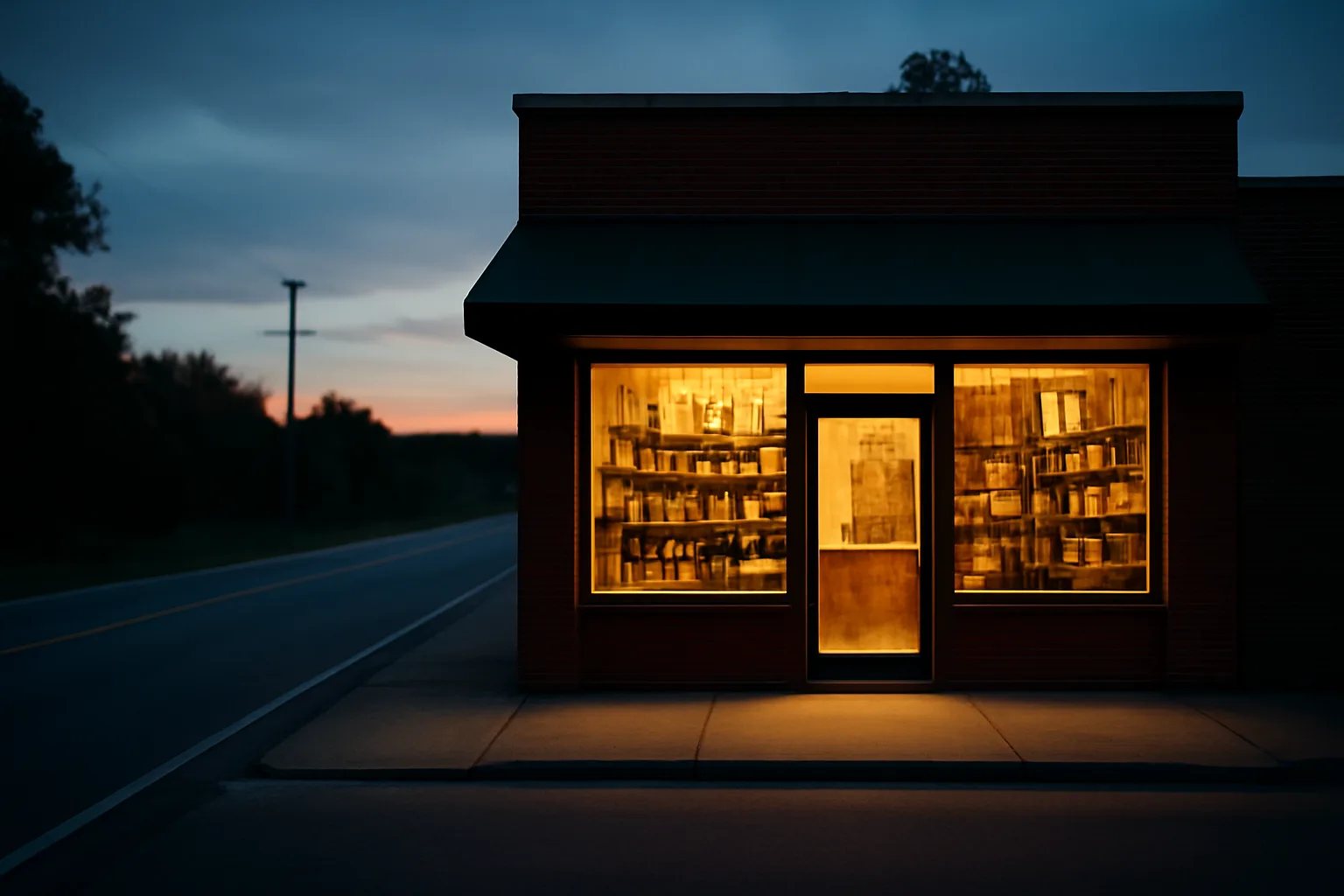
"State Line Rd Liquor & Wines" is a common business name near state borders, but the license itself always belongs to one specific state ABC authority, not a shared border zone. Fees, quotas, and transfer rules follow the state (and sometimes county or city) where the physical premises sits, so confirm jurisdiction with that state's ABC before you sign a lease or make an offer.
why does a name like "state line rd liquor & wines" cause licensing confusion?
Roads named State Line Road, Boundary Street, or similar run through hundreds of towns across the country, usually because they literally sit on or near a border between two states, counties, or municipalities. A retail liquor store or bar built along one of these roads can look like it straddles two jurisdictions, but it doesn't. Every physical address has one taxing authority and one liquor licensing authority, full stop. The confusion is real, though, and it costs people time. Business owners sometimes assume they can shop the two neighboring states for whichever license is cheaper or has looser quota rules, then just locate their sign near the line. That's not how it works. The license attaches to the premises, and the premises has one address, one zip code, and one set of state and local rules that apply to it. If you're scouting a location literally on a border (say, a strip mall where the parking lot crosses from Kansas into Missouri, or a building near the Delaware/Pennsylvania/Maryland tri-state area), the very first call you make isn't to a landlord. It's to the state Alcoholic Beverage Control agency for whichever state the building's legal address falls under, to confirm they consider that parcel within their licensing jurisdiction. County assessors' offices can usually tell you which side of a border line a parcel sits on if it's ambiguous.
how much is a liquor license?
There is no single national number, and anyone who quotes you one flat figure without asking your state and license type is guessing. Liquor license costs range from a few hundred dollars for a basic beer and wine permit in a low-cost state to well over $300,000 for a full liquor license in a quota-controlled market like parts of California or New Jersey [1]. The cost depends on three things: the type of license (beer/wine only versus full liquor, on-premise versus off-premise, restaurant versus bar), whether your state caps the number of licenses available in your county or city (a quota system), and whether you're buying new from the state or buying an existing license on the secondary market from another operator. In open (non-quota) states, you typically pay a state-set application and issuance fee, often in the low thousands of dollars or less, directly to the ABC agency. In quota states, once the state's cap is hit, the only way in is to buy an existing license from someone willing to sell, and that price is set by the market, not the state. That's why a full liquor license in Manhattan, Kansas City, or coastal New Jersey can run into six figures while the same license class in a rural county with no quota might cost the state fee plus a few thousand in local permits [1] [2]. Always confirm the current fee schedule with your state ABC authority directly. Fee schedules change, and quota counts shift as populations grow (many states tie quota to population per a fixed ratio, like one license per a set number of residents) [2].
how much is a liquor license in florida?
Florida uses a quota system for its full liquor license, called a Quota License (sometimes referred to as a 4COP license), and the number available per county is tied to county population under Florida law [3]. New quota licenses become available through a state lottery when population growth triggers new slots, and outside of that lottery, the only way to get one in a maxed-out county is to buy an existing one from a current holder. Florida Statutes Chapter 561 governs the state's beverage law, and the Florida Division of Alcoholic Beverages and Tobacco (ABT) administers licensing [3]. The state issuance fee for a quota license itself is modest, but because most urban Florida counties are already at quota, the real cost is what the license costs to buy on the open market from a current holder, and that has run from the tens of thousands of dollars into six figures depending on the county and how tight supply is [3] [4]. Florida also offers other license types that don't require quota, including SFS (a license limited to beer and wine service) and licenses tied to specific business types like hotels with a minimum room count or restaurants meeting certain seating and food-service ratios. If your concept doesn't need hard liquor, a non-quota beer/wine license in Florida is dramatically cheaper and faster to get than fighting for a quota slot. Check current fee tables directly on the ABT's licensing page before you budget anything [3].
how do liquor license quotas work across state lines?
Quota liquor license systems exist in a good number of states, and they typically cap the number of full liquor licenses per county or municipality based on population, using a ratio set in state statute (commonly something like one license per a fixed number of residents, though the exact ratio varies by state and you should confirm it directly rather than assume) [2] [3]. Here's the part that trips people up on border properties: quota is calculated per county or municipality within one state, and it has nothing to do with what's available across the line in the neighboring state. A county in Indiana at its quota cap doesn't care that the county across the border in Illinois has open slots. You cannot transfer a quota slot across a state line under any circumstance; state ABC agencies have no reciprocal quota-sharing arrangements with each other. So if you're deciding between two sites, one on each side of a border, run the quota check separately for each state's ABC. One side might have open quota licenses issued directly by the state for a modest fee, while the other side might require you to buy an existing license from a private holder for a much higher price. That price gap alone can decide where you sign a lease. This is exactly the kind of jurisdiction-specific research the State Liquor License Roadmap is built to organize: a $199 one-time tool that walks you through your specific state's quota status, license type, and timeline based on your target opening date, so you're not guessing which side of the line makes financial sense.
how do i get a liquor license, step by step?
The mechanics are broadly similar across states even though the fees and forms differ. Here's the general sequence, though you should verify each step against your specific state ABC's published process [1]. 1. Confirm your license type. Full liquor, beer/wine only, and on-premise versus off-premise are usually separate categories with separate fees and separate quota rules. 2. Check quota status for your exact address (county and municipality both, since some cities layer their own cap on top of the state's). If quota is maxed, decide now whether you're buying an existing license or waiting on a lottery/new-issuance cycle. 3. Confirm local zoning and any local moratorium or distance rule (many jurisdictions restrict alcohol sales within a set distance of schools or churches; this is separate from state licensing and enforced locally). 4. Submit your state application with required documents: business formation papers, lease or deed, floor plan, background checks on owners/managers, and often a local government sign-off or public notice period. 5. Pay state and local fees, which can include application fees, issuance fees, and annual renewal fees, all separate line items. 6. Wait out the review period. This varies enormously by state and by how backlogged the agency is; some approvals take weeks, others take many months, especially if a public hearing or protest period is required. 7. Pass any final inspection and get your license issued before you can legally sell. Every one of these steps can differ by state in ways that matter to your opening date, which is why back-planning from your lease signing and target open date, rather than assuming a generic timeline, matters more than almost anything else in this process.
how do i transfer a liquor license, especially near a state border?
A liquor license transfer moves an existing license from one holder to a new owner, or from one location to another, but only within the same state and usually within the same county or a defined transfer zone set by that state's law [1] [2]. You cannot transfer a license across a state line, ever. If you're buying a business on State Line Road and the existing license is issued by the neighboring state, and your new entity or new location falls on the other side, that license does not follow you. You'd need to apply fresh under the state where your actual address sits. Within a single state, transfers generally fall into two flavors: a change of ownership (the license stays at the same address but new owners take over) and a change of location (the same license holder wants to move the license to a new address, which many states restrict to the same county or even the same municipality). Both usually require a new application, a background check on the new owners, and state approval before the sale closes, not after. If you're buying an existing business specifically for its liquor license (common in quota states), get the transfer approval contingency written into your purchase agreement before you close on anything. Deals fall apart when buyers assume the transfer is a formality and then discover the state has a multi-month review queue or an objection from local government.
can you serve alcohol without a liquor license?
No. Selling or serving alcoholic beverages without the required state and local license is illegal in every U.S. state, and it typically carries both criminal and civil penalties, plus immediate risk to any future licensing you might want. This applies to a for-profit restaurant, a nonprofit hosting a fundraiser with a cash bar, or a private club alike; nearly all of these situations require some form of state or local permit before alcohol changes hands for consideration. There are narrow exceptions built into most state codes for private, non-commercial settings (a private party where you're not selling drinks, for instance), and some states offer short-term special event or one-day permits for nonprofits and temporary functions, which is a real, legal path if your event is temporary rather than an ongoing business. But operating a bar, restaurant, or retail store and pouring or selling alcohol before your license is actually issued (more than applied for) is a common and expensive mistake. Landlords and lenders sometimes push tenants to open "soft" before licensing clears; don't let alcohol service be part of that soft open. At the federal level, if you're manufacturing, importing, or wholesaling alcohol (more than serving it at retail), you also need a Federal Basic Permit from the Alcohol and Tobacco Tax and Trade Bureau (TTB) under the Federal Alcohol Administration Act, separate from your state retail license [5]. Most bars and restaurants only need the state and local retail license, but if your business model includes any manufacturing or wholesale distribution, check TTB's permit requirements directly [5].
how do i get a bartending license?
"Bartending license" is a common phrase but it's a bit of a misnomer in most states; what people usually mean is either a state-mandated alcohol server/seller certification or a private bartending school certificate (which is optional and purely for skills, not a legal requirement anywhere). The legally required piece, where it exists, is a responsible beverage service (RBS) certification, sometimes state-mandated (like Oregon's alcohol server permit rule or Utah's requirements) and sometimes only required if your employer or local jurisdiction opts in. Many states use or accept TIPS (Training for Intervention ProcedureS) or similar third-party programs, and some states run their own state-specific server training program [6]. Requirements vary enormously: some states require every server and bartender to hold a certification before pouring a single drink, others leave it entirely up to the employer, and some require it only for certain license types (like liquor liability insurance discounts, which is a business incentive rather than a legal mandate) [6]. A private "bartending school" that teaches pouring technique, drink recipes, and speed is a completely separate, optional thing. It can help you get hired, especially in a competitive market, but it is not a government-issued license and doesn't substitute for whatever your state's actual server certification requirement is. If you're opening a bar and hiring staff, check your state ABC's website for the specific server training mandate (if any) rather than assuming a bartending school diploma covers your legal obligation [6].
can anyone take the bar exam?
This question shows up in liquor licensing searches because of the shared word "bar," but it refers to something entirely different: the licensing exam for practicing law, administered by each state's bar association or supreme court, not anything related to alcohol service or liquor licensing. To sit for a state bar exam, candidates generally must have graduated from a law school (in most states, one accredited by the American Bar Association) and meet that state's character and fitness review . Requirements differ by state; a small number of states allow alternative paths like reading the law under a practicing attorney instead of attending law school (California, Vermont, Virginia, and Washington have some version of this), but the vast majority require a J.D. from an accredited program . If you're researching this because you're dealing with a legal question about your liquor license application (a denial, a zoning dispute, a transfer contested by a neighbor), what you actually want is a licensed attorney in your state, not information about how to become one yourself. For actual state bar attorney licensing status or to verify a lawyer's standing, check your state bar's official member search, like the Florida Bar member search or the California Bar directory.
does the type of establishment (bar vs. restaurant vs. retail store) change the license i need?
Yes, significantly. States generally split licenses into categories based on how alcohol is sold and consumed: on-premise (consumed where sold, like a bar or restaurant) versus off-premise (a retail package store or liquor store where the bottle leaves with the customer). Some states also require a minimum ratio of food sales to alcohol sales for a restaurant license to stay valid, which is a real compliance trap for bar-forward concepts that call themselves a restaurant to get a cheaper or easier license class. A store like the kind implied by a name such as "State Line Rd Liquor & Wines" (a retail package store selling bottles for off-site consumption) typically falls under an off-premise retail license, which is a different application, different fee, and often a different quota pool than an on-premise bar or restaurant license in the same state. Don't assume the license you researched for a bar concept applies if you pivot to a retail bottle shop, or vice versa; go back to your state ABC's license type list and match the actual business model. International and generic search terms like "bares" (Spanish for bars, and a term that shows up in bilingual license searches) point to the same underlying issue: the English or Spanish name of your concept doesn't change the legal license class. What matters is the activity (on-premise consumption, off-premise sale, manufacturing) and your state's specific category for it. Check the bar hub page or your state ABC's license type guide directly, and cross-reference against bares if you're researching in a bilingual market.
how far in advance should i start the license process before my target opening date?
Start the moment your lease is signed, or ideally before, because licensing timelines are the single most common reason a target opening date slips. Some states process straightforward, non-quota applications in a matter of weeks; others, especially in quota systems or where a public hearing and objection period is legally required, can take several months from a complete application to issuance [1]. Back-plan from your target opening date rather than forward-planning from lease signing. If you want doors open in, say, five months, work backward: subtract the state's typical review window (call the ABC and ask directly, since published timelines are often optimistic), subtract time for any required local public notice or hearing period, subtract time to gather background check documents and floor plans, and subtract build-out time that has to finish before your final inspection. Whatever's left is your actual deadline to submit a complete application, not your target open date. This is the exact planning gap the $199 one-time State Liquor License Roadmap is built to close: a back-planned timeline based on your state, your license type, and your opening date, so you know your real filing deadline instead of guessing and hoping the state moves faster than average.
Frequently asked questions
How much is a liquor license?
It ranges from a few hundred dollars in low-cost, non-quota states to over $300,000 in tight quota markets like parts of New Jersey or California, where you're buying an existing license on the open market rather than getting one direct from the state [2]. Always get current numbers from your state ABC agency, since fees and market prices shift constantly.
How much is a liquor license in Florida?
Florida's full liquor (quota) license cost depends on whether your county has open quota slots through the state lottery or whether you're buying an existing license from a private holder, which can run from the low tens of thousands into six figures in tight urban counties [4]. Non-quota beer/wine licenses are much cheaper. Confirm current figures with the Florida Division of Alcoholic Beverages and Tobacco.
How do I get a liquor license?
Confirm your license type and quota status with your state ABC agency, check local zoning and distance rules, submit the state application with formation documents, lease, floor plan, and background checks, pay the required fees, and wait out the review period before opening. Steps and timelines vary by state, so verify each one directly with your ABC [1][2].
How do I obtain a liquor license if my county is at quota?
If your county has hit its quota cap under state law, the only path in is usually to buy an existing license from a current holder, which is a private market transaction subject to state transfer approval, not a new state-issued license [3][4]. Some states also run periodic lotteries when population growth opens new quota slots.
How do I obtain a liquor licence (non-quota state)?
In a non-quota, open state, you typically apply directly to the state ABC agency, pay a set application and issuance fee, meet zoning and background check requirements, and get the license without needing to buy one from a private seller. Confirm your specific state's process, since fees and forms differ [1][2].
Can you serve alcohol without a liquor license?
No, not for any commercial sale or service. Every state requires a license or permit before alcohol is sold or served for consideration, with narrow exceptions for temporary special event permits and private, non-commercial gatherings [1]. Serving before your license is actually issued, more than applied for, risks fines, license denial, and criminal exposure.
How do I get a bartending license?
Most people mean a responsible beverage service (server/seller) certification, which some states mandate (like Oregon) and others leave to the employer, often satisfied through programs like TIPS or a state-run course [7]. A private bartending school diploma teaches pouring skills but isn't a legal license and doesn't replace your state's server certification requirement, if one applies.
Can anyone take the bar exam?
No. The bar exam is the licensing test for practicing law, and most states require a J.D. from an ABA-accredited law school plus a character and fitness review before you can sit for it [8]. A few states allow reading the law as an alternative path instead of law school. This has nothing to do with liquor licensing.
Can a liquor license be transferred across a state line?
No, never. Liquor licenses are issued and governed entirely within one state, and transfers only move a license within that same state, usually within the same county or a defined zone [2][3]. If your new location sits in a different state, you need a brand new application in that state, not a transfer.
What's the difference between a quota and non-quota liquor license state?
Quota states cap the number of full liquor licenses per county or city based on population under state statute; once that cap is hit, new entrants must buy an existing license from a current holder [3]. Non-quota states issue licenses directly to qualified applicants without a hard cap, usually for a lower, state-set fee.
Do I need a federal permit in addition to my state liquor license?
Most retail bars, restaurants, and liquor stores only need their state and local retail license. If your business manufactures, imports, or wholesales alcohol, you also need a Federal Basic Permit from the TTB under the Federal Alcohol Administration Act, which is separate from state retail licensing [6].
How long does it take to get a liquor license before opening day?
Timelines vary widely by state and license type, ranging from a few weeks for simple non-quota approvals to several months when a public hearing, objection period, or quota lottery is involved [2]. Back-plan from your target opening date and confirm current processing times directly with your state ABC agency.
Sources
- 27 U.S. Code Section 203, Federal Alcohol Administration Act basic permit requirement: federal permit requirements and general licensing cost/timeline variability
- Florida Division of Alcoholic Beverages and Tobacco, quota license information: Florida quota license population-based allocation and licensing process
- Florida Division of Alcoholic Beverages and Tobacco, license fee and quota drawing information: quota license lottery process and secondary market pricing for Florida quota licenses
- 27 CFR Section 1.20, Application for Basic Permit under the Federal Alcohol Administration Act: requirement for a Federal Basic Permit for manufacturing, importing, or wholesaling alcohol
- Oregon Revised Statutes Section 471.402, Alcohol server education requirements: state-mandated responsible beverage service certification requirements for servers/bartenders
- American Bar Association, Standard 502, Law School Admission requirement for ABA-approved schools: requirement of a J.D. from an accredited law school and character/fitness review to sit for a state bar exam