Last updated 2026-07-25
TL;DR
"Beer drawn" refers to draft beer poured from a tap or keg system rather than sold in bottles or cans. Most states let a standard beer/wine or full liquor license cover draft beer, but some require a separate draft/tap endorsement, extra bonding, or specific line-cleaning and metering compliance. Confirm the exact rule with your state ABC authority before you order equipment.
what does "beer drawn" mean on a liquor license application
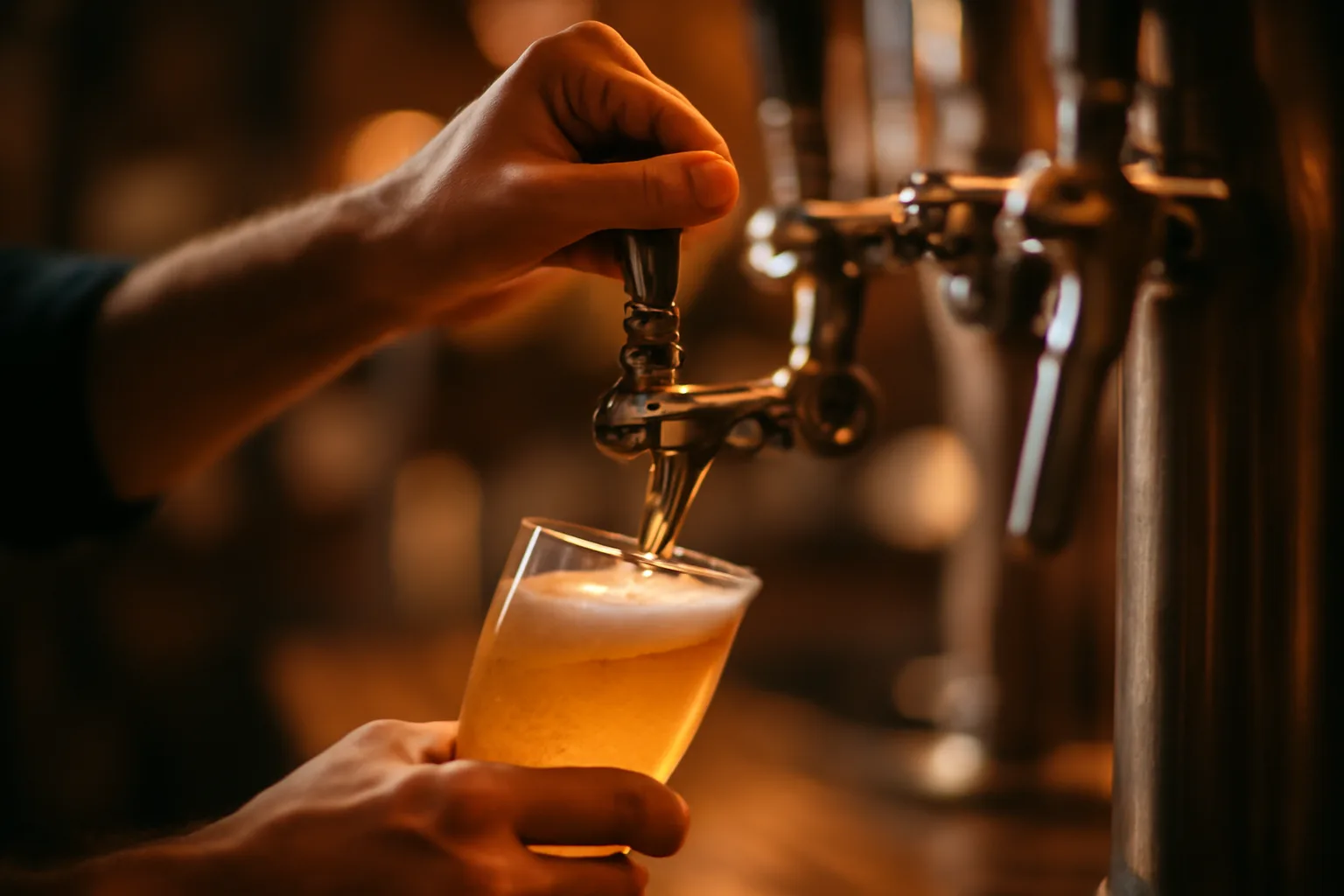
"Beer drawn" is old regulatory language for draft beer, meaning beer poured directly from a keg through a tap system into a glass, as opposed to beer sold in its original sealed container (a bottle or can). You'll still see the phrase "beer drawn from the wood" or "draught beer" in some state statutes and license applications, a holdover from when kegs were literally wooden barrels. On most license applications, this shows up as a checkbox or a separate license class. Some states fold draft beer rights into any beer license automatically. Others require you to specifically apply for, or add, draft/draught beer privileges, sometimes with its own fee and its own inspection of your tap lines, keg coolers and CO2 or nitrogen systems. Why does the state care about the distinction? Two reasons come up again and again in state code: tax accounting (draft beer is often taxed and reported differently by the barrel or gallon rather than by the case) and public health (tap lines need regular cleaning to avoid bacterial buildup, and inspectors want documented cleaning schedules). Federal brewer's permits and excise tax on beer removed from breweries are set under 26 U.S.C. § 5051, but your state ABC board controls the retail-level draft license and inspection rules that decide whether you need a separate endorsement to pour from a tap [1].
how much is a liquor license
There's no single national number, and anyone who quotes you one flat figure without asking your state and license type is guessing. Liquor license costs run from a few hundred dollars for a beer-and-wine-only permit in a low-demand area to well over $100,000 in a quota state where licenses trade on a secondary market. A few real reference points: Florida's quota liquor licenses (the 4COP series, discussed below) can cost tens of thousands of dollars to acquire on the open market on top of a modest state issuance fee, because the state only issues one new quota license per a set population increment in each county. California's ABC license fees for a standard on-sale general license (Type 47) run in the low thousands of dollars for the initial state fee, but original issue licenses in high-demand counties are capped by the state's quota system and often must be purchased from an existing holder for tens of thousands more [2]. Non-quota states with open licensing, like most beer-and-wine-only permits, tend to be far cheaper, sometimes under $1,000 for the state fee alone. The honest answer: your real cost is the state/local fee plus (if you're in a quota area) whatever the market demands for an existing license, plus local city or county permit fees, plus any consultant or attorney cost if you use one. Compare this across states before you sign a lease assuming a certain budget. Our license roadmap builder walks through state-specific fee ranges so you're not budgeting blind.
how much is a liquor license in florida
Florida issues several license series, and the cost depends heavily on which one you need and whether it's a quota or non-quota license. The state's quota (4COP) licenses, which allow full liquor, beer and wine sales for on-premise consumption, are capped based on county population under Florida Statutes § 561.20 [3]. In many counties every available quota license has already been issued, so new operators must buy one from an existing holder, and those resale prices can run from the low tens of thousands of dollars to well over $100,000 depending on the county's scarcity. Non-quota licenses, like the SFS (special food service) license for restaurants that derive a required percentage of gross revenue from food sales, or simple beer-and-wine licenses, are issued directly by the state for a state fee (confirm the current amount with the Florida Division of Alcoholic Beverages and Tobacco) without needing to buy an existing license on the secondary market [3]. So "how much is a liquor license in Florida" really splits into two very different answers: a state fee in the hundreds to low thousands of dollars for non-quota permits, versus a market-driven price that can hit six figures for quota 4COP licenses in dense counties. If you're planning a Florida opening, read our full Florida bar breakdown, and if you plan to use outside counsel, the Florida Bar member search tool lets you verify any attorney's license status before you pay a retainer.
how to get a liquor license (the general process)
The process looks similar across states even though the paperwork and timelines differ. First, you determine which license type you need: beer and wine only, full liquor (on-premise or off-premise), or a specialty type like a brewpub or caterer's permit. Your business model decides this. A wine bar doesn't need the same license as a full-service restaurant with a cocktail program. Second, you check whether your state uses a quota system for that license type in your county or city. If it does, you need to find out whether licenses are currently available or whether you'll have to buy one on a resale market, which changes your timeline and budget dramatically. Third, you assemble the application: business entity documents, lease or proof of location control, floor plans, background checks and fingerprints for owners and sometimes managers, financial disclosures, and local zoning or land use approval. Many states also require a local government sign-off (city council resolution, county approval, or a posted public notice period) before the state will approve. Fourth, you submit to the state ABC authority, pay the fee, and wait through the review period, which can run anywhere from a few weeks to several months depending on the state and whether objections are filed. Some states publish average processing times; ask your state ABC directly since these change with staffing and application volume. Fifth, once approved, you handle local business licensing, health department sign-off, and any required responsible-service training for staff before you can legally pour a drink. If beer drawn (draft) service is part of your plan, this is the stage where you confirm whether your state requires a separate draft endorsement or inspection of your tap system.
how to obtain a liquor license as a new business owner
If you're opening from scratch rather than buying an existing bar, obtaining a license means starting the application well before your target opening date, not after your lease is signed and your buildout is underway. Processing times vary enormously by state and by whether your license type is capped by quota, so a realistic plan works backward from your opening date. A reasonable back-of-envelope approach: identify your license type and check current processing timelines with your state ABC authority, add buffer time for any required public notice period or local hearing, and add more buffer if your license type requires a background check that includes out-of-state history. States that require a local government resolution or a posted notice period (common in quota states) tend to run longer than states with simple administrative review. Don't sign a lease assuming a specific approval date. Landlords sometimes agree to contingent lease clauses tied to license approval, which protects you if the timeline slips. If you're expanding into a second location, remember that most states require a full new application per physical premises. A license from one location generally doesn't transfer or cover a new address without its own transfer or reissue process, and rules on this differ by state, so check your state ABC authority's transfer procedures directly rather than assuming.
can you serve alcohol without a liquor license
No, not for commercial sale. Every state requires some form of license or permit to sell alcoholic beverages, whether for on-premise consumption (bars, restaurants) or off-premise (retail stores). Serving or selling alcohol without the appropriate state license is a criminal or civil violation in every state, and penalties can include fines, forced closure, and in some cases criminal charges against the individual who poured the drink and the business owner. There are narrow exceptions. Most states allow private, non-commercial hosting (a homeowner serving guests at a party isn't selling alcohol). Some states have specific carve-outs for nonprofit events with a one-day or temporary permit, BYOB arrangements where the establishment doesn't sell the alcohol itself, or licensed caterers operating under someone else's premise license for a private event. None of these substitute for a commercial license if you're running an ongoing bar or restaurant program. If your business plan includes any alcohol service, even just beer and wine with food, budget the license into your opening timeline from day one. Trying to open and serve "quietly" before approval comes through is one of the most common and costly mistakes new operators make, because getting caught before licensing not only risks fines, it can also delay or jeopardize the pending application itself.
how to get a bartending license
Most states don't actually require a "bartending license" in the sense of a formal credential to work behind the bar. What most states do require is a responsible beverage service (RBS) certification, sometimes called an alcohol server permit, which is a training course covering checking IDs, recognizing intoxication, and understanding liquor law basics. Requirements vary widely. Some states mandate RBS training for every server and bartender who touches alcohol; others leave it optional or delegate the decision to individual counties or cities. Where required, training is usually available online or in-person through state-approved providers, takes a few hours, and results in a card or certificate valid for a set number of years (commonly two to five, depending on the state). This certification is separate from your business's liquor license. The business (the bar or restaurant entity) holds the liquor license from the state ABC authority. Individual bartenders and servers, where required, hold their own RBS card. Both pieces need to be in place before you open: the business license and staff certifications. Check your specific state ABC authority's server training requirements, since "how to get a bartending license" really means "what server training does my state require," and that answer changes state by state.
how can i get liquor license as a first-time applicant
If you're new to this entirely, the practical starting point isn't the paperwork, it's confirming three things before you spend money on a lease or buildout: what license type your concept needs, whether that license is available in your target location without buying one on a resale market, and what the realistic timeline looks like given your state's current processing load. Call or check the website of your state ABC authority first. Every state publishes its license types and, in most cases, current fee schedules and application forms. Some states also publish quota availability by county, which tells you immediately whether you're looking at a simple administrative application or a competitive, expensive resale situation. From there, decide whether to handle the application yourself or bring in help. Simple non-quota beer-and-wine applications in low-regulation states are often manageable without professional help if you're organized and read the instructions carefully. Complex quota-license purchases, multi-owner entities, or locations with zoning complications benefit from an attorney or licensed consultant who works in your specific state, because mistakes on the application (wrong entity structure, missing disclosure, incomplete background check paperwork) can cost you months of delay. We built a $199 one-time State Liquor License Roadmap specifically for this stage: it maps out the license type, likely cost range, and timeline for your specific state and license category so you're not guessing before you sign a lease.
can anyone take the bar exam
This question comes up in liquor licensing searches because people confuse "bar" the drinking establishment with "bar exam," the legal licensing test for attorneys. They're unrelated. The bar exam has nothing to do with liquor licensing; it's the exam aspiring lawyers take to become licensed to practice law in a given state. To answer it directly: no, not literally anyone can take the bar exam. Most states require completion of a Juris Doctor (J.D.) degree from an American Bar Association-accredited law school before you're eligible to sit for the exam, though a small number of states (California among them) allow alternative paths like reading the law under a supervising attorney instead of attending law school [4]. Requirements are set state by state by each state's bar admission authority, not by a single national body. If you landed here because you're researching legal help for your liquor license application, what you actually want is a licensed attorney in your state, which you can verify through your state bar's member lookup, like the Florida Bar member search if you're opening in Florida. Verifying license status before you pay a retainer is worth the two minutes it takes.
does draft beer ("beer drawn") require a separate permit or endorsement
It depends entirely on your state, and this is the detail that trips up a lot of restaurant and bar owners who assume their beer license automatically covers draft. Some states treat draft and packaged beer identically under one beer license. Others require a specific draft/draught beer endorsement, sometimes with its own fee, sometimes tied to additional equipment inspection requirements (tap line cleaning logs, backflow prevention devices, CO2 tank storage and ventilation rules). The safest approach: when you file your license application, explicitly tell the state ABC authority that you plan to serve draft beer and ask whether that requires anything beyond your standard beer or liquor license. Don't assume. This is also the point to ask about keg deposit and return rules, since several states regulate keg registration or deposit refund requirements separately from the license itself. If you're installing a draft system, loop in your health department too. The FDA Food Code recommends cleaning of beverage tubing and dispensing equipment at intervals consistent with the manufacturer's specifications and applicable public health guidance, and many state and local health departments cite a 2-week cleaning interval as the common industry benchmark for line cleaning [5]. Failing an inspection here can shut down service even if your liquor license itself is in good standing.
what's the difference between a beer license, a beer and wine license, and a full liquor license
| Beer only | Malt beverages, draft and packaged | Low (often under $500-$1,000, confirm with state ABC) | Rarely | |
|---|---|---|---|---|
| Beer and wine | Malt beverages plus wine | Moderate (often several hundred to a few thousand dollars) | Sometimes | |
| Full liquor (on-premise) | Beer, wine, spirits | State fee often modest but resale/market price can run tens of thousands to $100,000+ in quota areas | Often, especially in dense counties | If your concept could work with beer and wine alone (a wine bar, a pizza place, a brunch spot), that decision alone can save you tens of thousands of dollars and months of waiting versus chasing a full liquor quota license. |
These are three distinct tiers in most states, and confusing them is one of the more expensive mistakes a new operator can make when budgeting. A beer-only license permits sale of malt beverages (including draft/"beer drawn") but not wine or spirits. A beer and wine license adds wine to that but still excludes spirits and spirit-based cocktails. A full liquor license (sometimes called an on-premise consumption license, or in Florida the 4COP designation) permits beer, wine, and distilled spirits [3]. Cost and availability scale up sharply as you move up this ladder. Beer-only and beer-and-wine licenses are frequently non-quota (the state issues them on demand to qualifying applicants) and cost relatively little. Full liquor licenses are far more often subject to quota caps tied to county population, meaning availability and price depend on local scarcity rather than a flat state fee [2]. | License tier | Typically covers | Common state fee range | Quota-limited? |
what happens if you sell alcohol under the wrong license category
Selling outside your license's authorized category, for instance pouring draft beer under a license that only permits packaged beer, or serving spirits under a beer-and-wine-only license, is a licensing violation even if you're otherwise compliant on age verification and hours. State ABC enforcement agents do conduct inspections and sting operations, and violations here typically result in fines, license suspension, or in repeat cases license revocation. This is why the "beer drawn" distinction matters even for operators who think of it as a minor technical detail. If your application says packaged beer only and you install a draft system before amending your license, you're operating outside your permit's scope from day one, even though the underlying product (beer) seems identical to a regulator. The fix is simple and cheap compared to the risk: before you install any tap system, call your state ABC authority, confirm whether your license category covers draft beer, and if not, find out the process and cost to add that endorsement. It's a five-minute phone call that avoids a possible suspension months into operation.
how to plan your license timeline backward from your opening date
Work backward from the day you want to pour your first drink, not forward from when you happen to submit paperwork. Start by identifying your license type and whether it's quota-limited in your target location; quota licenses generally take longer because of resale negotiations, transfer applications, and sometimes public notice or hearing requirements. Add your state's stated or typical processing window for your license category (confirmed directly with your state ABC authority, since this varies by state and changes with agency staffing). Add extra time for any local zoning approval, health department sign-off, or city council resolution your jurisdiction requires. Add a buffer for background check processing if any owner has out-of-state residency history. Then subtract that total from your target opening date to get your "file by" deadline, and file before that, not on it. If you're expanding to a second or third location, don't assume your existing experience predicts your new timeline. Local jurisdiction rules, quota availability, and processing speed can differ even within the same state. Treat each new location as its own project with its own timeline research. This backward-planning approach is exactly what our State Liquor License Roadmap, a $199 one-time tool, is built to produce: a state-specific, license-type-specific timeline and cost range so you can set a realistic opening date instead of guessing and then scrambling when the state's timeline doesn't match your lease's rent-start date.
Frequently asked questions
How much is a liquor license?
It depends entirely on your state and license type. Non-quota beer or beer-and-wine licenses can cost under $1,000 in state fees. Full liquor licenses in quota states, like Florida's 4COP or certain California county allocations, can run tens of thousands to over $100,000 on the resale market because supply is capped by population formulas. Always confirm current fees with your state ABC authority.
How to get a bartending license?
Most states don't issue a formal bartending license. Instead they require responsible beverage service (RBS) training, a short course on ID checking and intoxication recognition that results in a certificate valid for a set number of years. Requirements vary by state and sometimes by county, so check your state ABC authority's server training rules directly.
How can I get a liquor license for a new restaurant or bar?
Determine your license type based on your concept, check whether it's quota-limited in your county, gather your entity documents, lease proof, floor plans and background check materials, then submit to your state ABC authority and wait through review. Timelines vary by state; start the process months before your target opening date, not after signing your lease.
How to obtain a liquor license if I'm buying an existing bar?
You'll typically apply for a license transfer rather than a brand-new license, which still requires state ABC review of the new owner's background and financials. Some states allow temporary operating permits during transfer review; others don't. Confirm your state's specific transfer process, since assuming the existing license simply carries over can delay your opening.
Can anyone take the bar exam?
No. Most states require a Juris Doctor degree from an ABA-accredited law school before you're eligible to sit for the bar exam, though a few states allow alternative paths like law office study. This is unrelated to liquor licensing; it's the exam attorneys take to practice law, and rules are set state by state.
How to obtain a liquor licence (UK/international spelling)?
Outside the US, alcohol licensing works through different national or regional systems (in the UK, for example, premises licenses are issued by local licensing authorities under the Licensing Act 2003). This article covers US state ABC systems specifically; if you're licensing outside the US, check your country's or region's specific licensing authority.
How much is a liquor license in Florida?
It splits into two categories. Non-quota licenses (like special food service or beer-and-wine permits) cost a state fee in the hundreds to low thousands of dollars. Quota 4COP full liquor licenses, capped by county population under Florida Statutes § 561.20, often must be bought from existing holders and can cost tens of thousands to over $100,000 depending on county scarcity.
How much is a liquor licence in Florida for a small restaurant?
Many small restaurants qualify for Florida's SFS (special food service) license, a non-quota license tied to meeting a required percentage of revenue from food sales, which avoids the expensive quota 4COP resale market. Confirm current state fees and the food-sales percentage threshold directly with the Florida Division of Alcoholic Beverages and Tobacco.
Can you serve alcohol without a liquor license?
No, not for any form of commercial sale. Every state requires a license to sell alcohol on-premise or off-premise, and doing so without one risks fines, forced closure, and criminal liability. Narrow exceptions exist for private non-commercial hosting and certain nonprofit one-day permits, but none cover ongoing bar or restaurant service.
Does "beer drawn" or draft beer need its own license endorsement?
Sometimes. Some states include draft beer automatically under any beer license; others require a separate draft/draught endorsement with its own fee and equipment inspection covering tap lines and CO2 systems. Ask your state ABC authority specifically when you file, since assuming coverage can put you outside your license's authorized scope.
What's the difference between a beer license and a full liquor license?
A beer license covers only malt beverages, draft or packaged. A beer and wine license adds wine. A full liquor (on-premise) license adds distilled spirits and cocktails. Full liquor licenses are far more often subject to county-level quota caps, making them significantly more expensive and harder to obtain than beer or beer-and-wine permits.
How long does it take to get a liquor license?
Timelines vary widely by state, license type, and whether quota or transfer review is involved, ranging from a few weeks for simple non-quota applications to several months for quota licenses requiring public notice or local hearings. Ask your state ABC authority for current average processing times before setting your opening date.
Do bartenders need their own certification separate from the business's liquor license?
In states that mandate responsible beverage service training, yes. The business holds the liquor license from the state ABC authority; individual bartenders and servers hold their own RBS card or certificate where required. Both need to be in place before opening, and rules on which staff need certification vary by state.
Sources
- 26 U.S.C. § 5051, Imposition and rate of tax on beer: Federal excise tax on beer removed from breweries is set by federal statute, separate from state retail draft license rules
- California Department of Alcoholic Beverage Control, License Fees Schedule: California on-sale general license fees and quota-based original issue restrictions in certain counties
- Florida Statutes § 561.20, Limitation upon number of licenses issued: Florida's quota structure for liquor licenses is capped based on county population under this statute
- State Bar of California, Admissions requirements: California allows law office study as an alternative path to law school before taking the bar exam
- FDA Food Code 2022, Section 4-602.11 (Equipment, Food-Contact Surfaces, Nonfood-Contact Surfaces, and Utensils): Draft beer dispensing equipment cleaning frequency guidance tied to manufacturer specifications, with a commonly cited 2-week interval as an industry benchmark