Last updated 2026-07-26
TL;DR
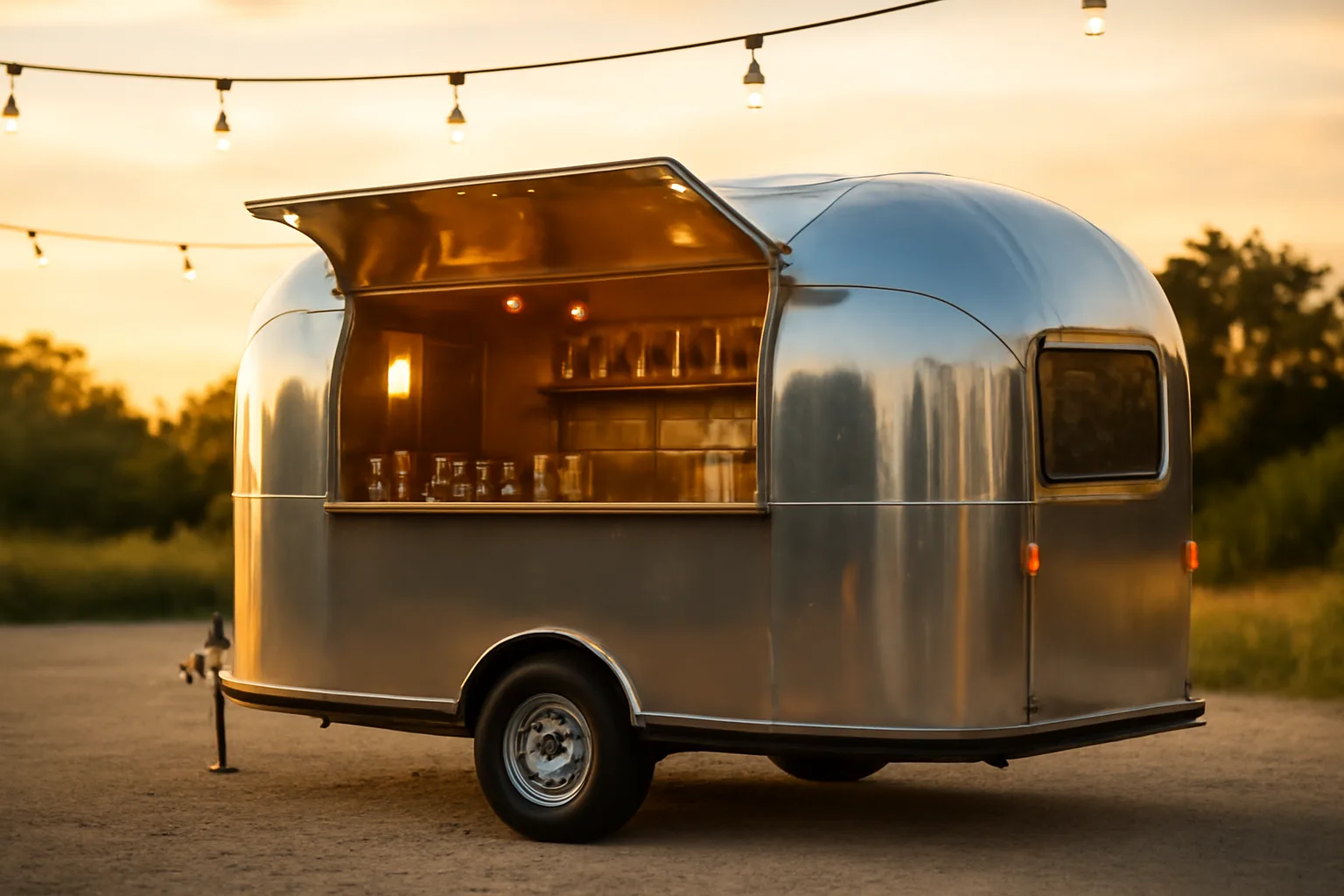
A mobile bar (trailer, truck, or trike) generally needs the same class of liquor license as a stationary bar, plus a caterer's permit or special event permit for each off-site location. There's no separate national "mobile bar license." Costs and quotas depend entirely on your state ABC authority, and you'll usually need written permission or a permit for every venue you pour at.
Is there a special liquor license just for mobile bars?
No. No state issues a license called a "mobile bar license." Every state runs its liquor licensing through the same Alcoholic Beverage Control (ABC) or equivalent agency that licenses restaurants and taverns, and a mobile bar operator has to fit into one of the existing license categories, then layer permits on top for the mobile part. Most mobile bar businesses end up holding some combination of: a base on-premise retail license tied to a commissary or home address, a caterer's permit or endorsement that lets that base license extend to off-site locations, and a special event permit for each individual gig if you're not working under a caterer's authorization. The exact names differ by state. New York calls it a "caterer's permit" under its Alcoholic Beverage Control Law [1]. Texas has a Caterer's Permit (Permit type CG) issued by the Texas Alcoholic Beverage Commission [2]. California folds catering rights into specific on-sale license types and requires a separate notification (an "Event Registration") to the ABC for each private event where you serve under someone else's license [3]. If you're picturing a single application that gets you a certificate to legally drive around and pour anywhere, that doesn't exist. You're really assembling two or three approvals: the underlying alcohol license, the mobile/catering authorization, and local permits for each site (health department, fire marshal, local special event permit, sometimes a temporary structure permit for the trailer itself).
How do I get a liquor license for a mobile bar, step by step?
Start with your state ABC website and figure out which license category matches your business model. That decision drives almost everything downstream: cost, renewal cycle, whether you need a caterer's endorsement or a string of one-off event permits. A workable sequence looks like this. First, nail down your business entity and a real commissary or storage address; most states require a fixed address tied to the license even if you never pour there. Second, identify the license class (on-premise retail, caterer's permit, or a hybrid) and confirm with your state ABC authority whether that class is subject to a quota or a waiting list in your county. Third, gather your documents: entity formation paperwork, lease or commissary agreement, floor plan or vehicle diagram, background check and fingerprints for owners and managers, and often a certificate of responsible-service training completion. Fourth, submit the application with the required fee (this varies enormously; confirm with your state ABC authority for the current schedule) and expect a public notice or objection period in many states before approval. Fifth, once the base license is active, apply separately for a caterer's endorsement or file event-by-event permits as you book work. Budget real time for this. Some states move faster for caterer add-ons than for a brand-new retail license, but a first-time applicant with a new entity and a new location should expect the review to run weeks, not days. Some states publish target windows; others don't commit to one at all. Call the agency and ask directly what their current processing time is. That number moves depending on staffing and backlog. If you'd rather have someone map this out against your actual opening date instead of guessing at the sequence, that's exactly the kind of back-planning problem LiquorReady's $199 State Liquor License Roadmap is built to solve: it takes your state, license type, and target date and lays out the order of operations and rough timeline.
How much is a liquor license?
There's no single national price. Liquor license costs range from a few hundred dollars for a basic beer-and-wine permit in a low-cost state to well over $10,000 to $20,000 (sometimes far more) for a full liquor, quota-controlled license in a tight market. The federal government adds its own layer on top. The Tax Relief and Health Care Act of 2006 set the alcohol dealer Special Occupational Tax rate to zero starting July 1, 2008, but retail dealers must still register with TTB using Form 5630.5d [4]. What actually drives the number: whether your state caps the total licenses per population (a "quota" state) or issues them freely, whether you're buying a brand-new license from the state or transferring an existing one on the secondary market (transfers in quota states can cost far more than the state's own issuance fee), and your local jurisdiction's own add-on fees, which stack on top of the state fee. For a mobile bar specifically, add the caterer's permit or endorsement fee (again, confirm with your state ABC authority; some states charge this as a flat add-on to an existing license, others as a standalone permit) plus per-event fees if you're not caterer-licensed and instead filing individual event permits. Those per-event fees are often modest individually but add up fast if you're doing dozens of weddings and corporate events a year.
How much is a liquor license in Florida?
Florida licenses run through the Division of Alcoholic Beverages and Tobacco (ABT), part of the Department of Business and Professional Regulation. The state uses a quota system for full liquor licenses tied to county population, capped and re-issued through a public drawing when new ones become available under Florida Statutes section 561.20 [5]. That means in many counties you cannot simply apply and pay a fee for a full liquor license; you either win a state drawing or buy an existing quota license from a current holder, and those resale prices are set by the market, not the state, and can run into six figures in dense counties. Beer and wine licenses (2-COP, 2-APS type licenses) are not quota-restricted the same way and are considerably cheaper and faster to get. A mobile bar planning to pour only beer and wine has a much simpler and cheaper path in Florida than one planning to serve spirits. Because Florida's actual issuance fees and quota-drawing fees change and vary by license series and county, don't rely on a number quoted anywhere online, including here. Confirm the current fee schedule directly on the Florida DBPR ABT license fee page [6]. If you're building a mobile bar business that will also want a stationary florida bar location later, plan the license category around that expansion now rather than switching later.
Can you serve alcohol without a liquor license?
No, not for a commercial mobile bar operation, and this is the mistake that shuts down more bar-cart and trailer-bar startups than any other single thing. Selling or serving alcohol without the correct state license is a criminal and administrative violation in every state; penalties range from fines to license revocation for any future application to, in some states, misdemeanor or felony charges depending on volume and intent. The grey area people ask about is private events. If a client hires you to staff their own party and the client purchases and owns all the alcohol (a "BYOB" or client-provided-alcohol model), some states let you provide bartending labor without you personally holding a liquor license, because you're not the one selling the alcohol. This varies a lot by state and is exactly the kind of thing that gets people in trouble when they assume it applies everywhere. New York, for instance, treats unlicensed sale or delivery of alcoholic beverages as a violation under ABC Law section 100 [1], and "providing service" for a fee while the host supplies the liquor is treated differently in different jurisdictions. If you plan to buy the alcohol, mark it up, and sell drinks or charge a per-drink or per-person bar package fee, you need a license, full stop. Confirm the BYOB and client-supplied-alcohol distinction with your specific state ABC authority before building a business model around it.
How do I get a bartending license?
Most states don't require a standalone "bartending license" at all. What they require is a responsible beverage service (RBS) certification, sometimes called a TIPS certificate, ServSafe Alcohol, or a state-run equivalent, completed by anyone who serves or sells alcohol, including mobile bar staff. A handful of states require an individual server or seller permit with a state ID number rather than just a private certification course. Oregon's OLCC, for example, mandates individual alcohol server education and permitting under its statewide service permit program, administered under ORS 471.310 . Getting certified is usually a short online or in-person course (often 2-4 hours) followed by a test, and certificates typically need renewal every 2-5 years depending on the state. If you're hiring bartenders for a mobile bar, check whether your state requires every pourer to hold this certification or just requires the business owner or manager to hold it. States differ, and getting this wrong is a common violation caught during compliance checks. This training requirement is separate from, and in addition to, your business's liquor license. Don't confuse the two when you're planning your opening timeline: your bartenders can get certified in an afternoon, but your business license application can take weeks or months.
Can anyone take the bar exam?
This question shows up in liquor license searches because of the word "bar," but it refers to the legal profession's bar exam, not alcohol licensing. Eligibility to sit for a state bar exam (to become a licensed attorney) generally requires graduation from an ABA-accredited law school, or an equivalent path in a handful of states that allow law-office study or apprenticeship routes, and is governed by each state's own bar admission rules, not the ABC agency . If you landed here looking for how to become a lawyer, that's a completely different licensing system administered by state bar associations and the National Conference of Bar Examiners, not your state's alcohol beverage control division. Check your state's bar association website or resources like the florida bar or florida bar member search pages for that process. It has nothing to do with getting a liquor license for a mobile bar.
What permits does a mobile bar need beyond the state liquor license?
A state liquor license is the floor, not the whole structure. Mobile bars typically also need a local health department permit or food service license (since you're handling ice, garnish, and often mixers), a local business license in whatever city or county you're based in, a temporary event permit issued by the venue's local jurisdiction for each event location, and sometimes a fire marshal sign-off if your setup includes propane, generators, or a covered structure. Many municipalities also require the event host or venue to hold their own permit or insurance naming you as an additional insured, especially for outdoor weddings or public festivals on parks department or city-owned land. General liability insurance (often $1 million per occurrence is the baseline venues ask for) and liquor liability coverage are separate from your state license entirely. Almost every serious venue will ask to see a certificate of insurance before you show up. If your mobile bar travels across state lines for events, know that each state treats out-of-state mobile bar businesses differently, and some require you to hold an in-state license or partner with a locally licensed caterer rather than importing your home-state permit. There's no reciprocity system for retail liquor licenses the way there sometimes is for driver's licenses.
Does the license type change if I'm a nonprofit fundraiser or one-time event?
Yes, and this is where the special event permit (sometimes called a temporary permit or one-day license) comes in. Most states offer a separate, cheaper, faster permit specifically for nonprofits, festivals, and one-time private events, distinct from the ongoing commercial license a full-time mobile bar business would carry. If you're a mobile bar company hired to pour at someone else's one-time fundraiser, you generally still need your own underlying license or caterer's permit. The event organizer's one-day permit covers their right to hold the event, not your right to sell and pour as a business. Don't assume the host's permit covers you. Confirm the relationship between the event permit and your operator's license with the specific state ABC authority issuing both.
How do quota systems affect mobile bar licensing?
In quota states (Florida is the clearest example, with its county-population-based quota under Florida Statutes 561.20 [5]), the scarcity is in the base retail license, not in the caterer's endorsement layered on top. That means the hard, expensive part of getting into the mobile bar business in a quota state is securing any qualifying license at all, whether through a state drawing, a transfer purchase, or by structuring your business under a beer-and-wine license that isn't quota-restricted. Non-quota states make this part much simpler; you apply, you pay the fee, you wait out the review period. Many states issue on-premise licenses without a hard population cap, though local zoning and moratoriums can still create de facto scarcity. Always confirm with your state ABC authority whether the specific license class you need is quota-controlled in your county. The answer changes your entire cost and timeline picture, sometimes by tens of thousands of dollars.
Frequently asked questions
How much does a liquor license cost for a mobile bar business?
It depends entirely on your state, county, and whether the license class is quota-controlled. Costs range from a few hundred dollars for a beer-and-wine permit in a low-regulation state to tens of thousands (or far more for a purchased transfer in a tight quota market like parts of Florida). Add a caterer's permit fee on top. Confirm current fees with your state ABC authority.
Do I need a caterer's permit if I already have a liquor license?
Usually yes, if you plan to pour at locations other than the address on your base license. A caterer's permit or endorsement is what legally extends your license's authority to off-site events like weddings and private parties. Some states build this into the on-premise license class itself; others require a separate application and fee. Check with your state ABC authority.
Can I use a friend's or venue's liquor license for my mobile bar?
Generally no, not for selling alcohol yourself. If the venue holds the license and its own staff serves the alcohol, that's their liability and their license. If you're bringing your own trailer, staff, and alcohol to sell, you need your own license or caterer's permit; borrowing someone else's license typically isn't legally valid and can jeopardize both parties' licenses.
How long does it take to get a liquor license for a mobile bar?
There's no universal timeline; it depends on the state, the license class, and whether public notice or objection periods apply. Caterer's endorsements added to an existing license often move faster than a brand-new retail license application. Ask your state ABC authority for their current processing estimate, and build in buffer time before your planned opening date.
How much is a liquor license in Florida for a mobile catering business?
Florida's quota liquor licenses are capped by county population under Florida Statutes 561.20, so full liquor licenses in dense counties can require a state drawing or a costly market-rate transfer purchase. Beer and wine licenses (non-quota) are cheaper and faster. Confirm current fee schedules on the Florida DBPR ABT license fee page.
Can you serve alcohol without a liquor license at a private party?
If you're selling alcohol or charging for it in any form, no, you need a license or permit in nearly every state. If the host owns and supplies the alcohol and you're only providing bartending labor, some states allow that without you holding a license, but this varies significantly. Confirm the rule with your specific state ABC authority before relying on it.
How do I get a bartending license or certification?
Most states require a responsible beverage service certification (like ServSafe Alcohol or TIPS) rather than a formal "bartending license." It's typically a short course plus a test, renewable every 2 to 5 years. A few states, including Oregon under ORS 471.310, require an individual server/seller permit with a state-issued ID number instead.
Can anyone take the bar exam to become a lawyer?
This refers to the legal profession's bar exam, unrelated to alcohol licensing. Eligibility generally requires graduating from an ABA-accredited law school, though a small number of states allow apprenticeship or law-office study paths instead. Rules are set by each state's bar admission authority, not the alcohol beverage control agency.
Is a mobile bar trailer treated differently than a bar cart or truck under state law?
Most states don't distinguish by vehicle type in the statute itself; what matters is whether alcohol is being sold and where. A trailer, cart, or truck all fall under the same caterer's permit or event-permit framework. Local rules about parking, propane, and structure size can differ though, so check with your city or county as well.
Do I need a separate permit for every event my mobile bar works?
If you hold a caterer's endorsement, often no, one endorsement can cover multiple events under your existing license, though many states still require advance notice or registration per event. Without that endorsement, you'll likely need a special event permit filed separately for each gig. Confirm your state's specific requirement before booking a season of events.
What happens if I run a mobile bar without the right license?
You risk fines, seizure of alcohol and equipment, denial of future license applications, and in some states misdemeanor or felony charges depending on volume and intent. It also typically voids any liquor liability insurance coverage, leaving you personally exposed if an intoxicated guest causes harm. It's not a risk worth taking to save a few weeks of paperwork time.
Does my mobile bar need insurance in addition to the liquor license?
Yes. A state liquor license doesn't include insurance. Most venues and municipalities require general liability insurance (commonly around $1 million per occurrence) and separate liquor liability coverage before they'll let you set up. This is on top of, not instead of, your state and local licensing requirements.
Sources
- New York State Senate, Alcoholic Beverage Control Law: New York issues a caterer's permit under its Alcoholic Beverage Control Law, and unlicensed sale of alcohol is a violation under ABC Law section 100
- Tax Relief and Health Care Act of 2006, Pub. L. 109-432, Div. A, Section 422: Retail dealers in alcohol register with TTB, with Special Occupational Tax rates set to zero starting July 1, 2008
- Florida Legislature, Florida Statutes Section 561.20: Florida caps quota liquor licenses by county population and issues additional licenses through a public drawing
- Florida Department of Business and Professional Regulation, ABT License Fees: Florida's current alcohol license fee schedule is published and updated by DBPR ABT
- Oregon Revised Statutes Section 471.310, Individual Service Permits: Oregon requires individual server/seller permits with a state-issued ID number for alcohol service
- American Bar Association, Requirements for Bar Admission: Bar exam eligibility generally requires graduation from an ABA-accredited law school, with limited alternative paths in some states