Last updated 2026-07-26
TL;DR
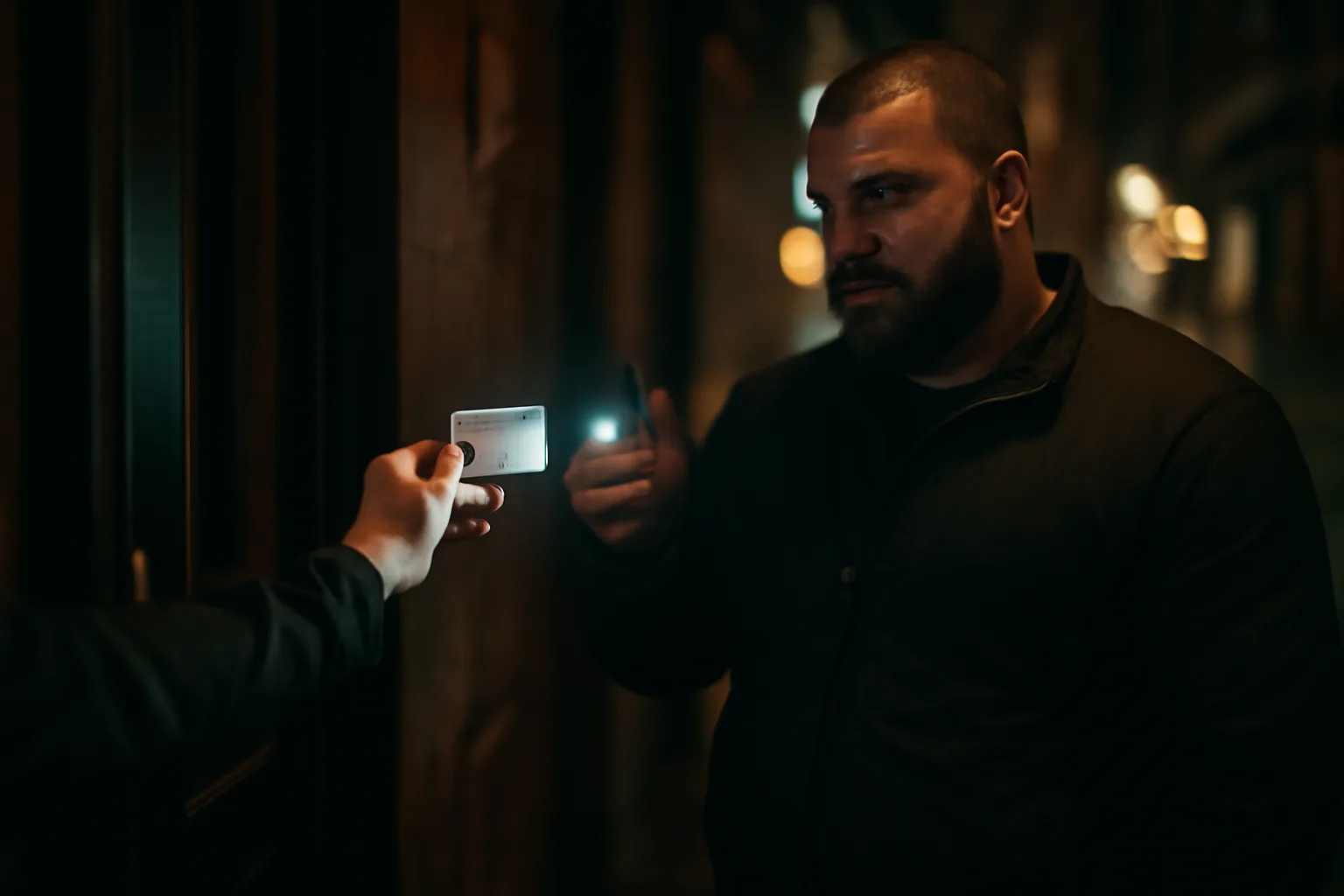
No. A vertical driver's license in the US means you're under 21, and bars are legally allowed to refuse entry or service to anyone underage regardless of the card's format. Bouncers are trained to check orientation first because it's the fastest visual cue for age. This isn't about the license type at all; it's about what the license reveals: you're not old enough to drink yet.
why does a vertical license keep you out of a bar
In every US state that uses the vertical/horizontal ID format, a vertical orientation means the holder is under 21. Most states flip the license to horizontal once you turn 21, so bouncers and bartenders use orientation as a fast first check before they even read the birthdate. This started because bars needed a way to spot underage patrons in a crowded room without pulling out a magnifying glass every time. The format itself isn't a law that says "no vertical IDs allowed." It's a design convention that most state DMVs adopted specifically so bars, liquor stores, and door staff could do a quick visual scan. California's DMV issues a vertical card design for identification and driver's license cards for people under 21, switching to the standard horizontal layout at 21, as part of its identification card design standards [1]. The exact age cutoffs for the vertical format vary slightly by state, but the under-21 signal is consistent almost everywhere that uses this system. So the real reason you can't get in isn't the card shape. It's what the shape tells the door person: you're not legally old enough to be served, and in a lot of jurisdictions, not legally old enough to even be on the premises after a certain hour, depending on local rules for bars versus restaurants.
can a bar legally refuse entry based on your id
Yes. A bar holding a liquor license operates under state alcohol beverage control (ABC) rules that make the licensee responsible for who enters and who gets served. Refusing entry to anyone who appears underage, or whose ID reads under 21, is standard practice and legally protected. Most state ABC codes put the burden of proof on the establishment, not the customer. If a bartender serves a minor, the business can lose its license, face steep fines, or face criminal liability, regardless of whether the minor used a fake ID or a real vertical one. Given that exposure, bars set their internal policy stricter than the law requires: many simply won't let anyone in whose ID shows they're under 21, even if the venue technically allows minors during certain hours. This is also why door staff often ID everyone, even people who are obviously well over 21. It's not about you personally. It's about consistency. If a bar's policy is "check every ID," and staff skip you because you look old enough, that inconsistency is exactly the kind of gap that state investigators look for during a compliance check.
is a vertical license a real id or a fake
A vertical license is a completely real, state-issued ID. It's not fake, and it's not lesser than a horizontal one. It's just the version issued to people who haven't hit the legal drinking age yet. The confusion usually comes from people assuming the vertical format itself signals something suspicious. It doesn't. Every DMV that uses this dual-format system (and most states do) issues the same card stock, same security features, same everything, just rotated 90 degrees for a different age bracket. Bouncers know this, which is exactly why they trust it as a quick screen. Where things get murkier is with out-of-state IDs. Not every state uses the vertical/horizontal system the same way, and some states don't use it at all. A door person unfamiliar with an out-of-state format might scrutinize it more, ask for a second form of ID, or use an ID scanner. That's a training and liability issue on the bar's side, not a flaw in your license.
can you serve alcohol without a liquor license
No, not legally, and this is one of the most consistently enforced areas of state alcohol law. Any business that sells or serves alcohol for on-premise consumption needs an ABC license issued by the state (and often a separate local permit too). Selling without one is typically a criminal offense, more than a civil fine. The federal side matters too. The Alcohol and Tobacco Tax and Trade Bureau (TTB) requires a Federal Basic Permit for anyone "engaged in the business" of importing, producing, rectifying, or wholesaling distilled spirits, wine, or malt beverages, under the Federal Alcohol Administration Act, 27 U.S.C. 203 [2]. Retail on-premise servers, meaning bars and restaurants pouring drinks for customers on-site, generally don't need a TTB basic permit at all, since that requirement targets producers, importers, and wholesalers, not retailers. Retail servers still need to comply with state ABC licensing, and in most states that means a specific license class for on-premise consumption, separate from off-premise retail. If you're planning to open a bar or restaurant with alcohol service, this is the wall you hit before you can pour a single drink: no state license, no legal service, full stop, regardless of how ready your kitchen or your staff is. For a broader look at how license types differ by state, see our license types overview.
how much is a liquor license
There's no single national number, because liquor licenses are issued state by state (and sometimes county or city too), and costs range enormously depending on license type, population-based quotas, and whether you're buying a new license from the state or transferring an existing one on the open market. Some states issue on-premise licenses directly for a set government fee, often in the low thousands of dollars, if the market isn't capped by a quota system. Other states, especially quota states where the number of licenses is fixed by population, force buyers into a secondary market where existing license holders sell their licenses for whatever the market will bear, sometimes tens of thousands of dollars, sometimes into six figures in dense urban areas. The honest answer: confirm the specific fee schedule with your state ABC authority before you budget anything, because the range between states, and between quota and non-quota systems within the same state, is too wide to generalize. If you want a structured way to map this out for your specific state and timeline, that's exactly the kind of planning our $199 State Liquor License Roadmap is built for.
how much is a liquor license in florida
Florida runs a quota system for its most valuable license type, the 4COP (quadruple county package) license, which allows sale of beer, wine, and spirits for both on-premise and off-premise consumption. The number of 4COP quota licenses available per county is tied to county population, and new quota licenses are issued through a random drawing when the state determines more are available, per Florida's Beverage Law under Florida Statutes Chapter 561 [3]. Because quota licenses are capped, many operators end up buying an existing one on the secondary market rather than waiting for a lottery, and those prices vary by county and by how many licenses are in circulation. Non-quota license types, like beer-and-wine-only licenses (2COP) or licenses for certain qualifying business types (hotels, restaurants meeting seating and revenue requirements), don't require winning a lottery and are generally far cheaper and faster to obtain. Given how much Florida's costs swing by county and license class, don't anchor your budget to a number you saw online. Confirm current fees and quota status directly with the Florida Division of Alcoholic Beverages and Tobacco [3]. For state-specific planning, our Florida bar guide covers license classes in more detail, and the Florida Bar member search tool is a separate resource for attorney licensing, not liquor licensing, if you found this page while searching that term.
how do i get a liquor license (the general process)
The process follows a similar backbone in almost every state, even though the specific forms, timelines, and fees differ. First, you determine which license type your business needs (on-premise consumption, off-premise retail, beer and wine only, full liquor, and so on), because applying for the wrong class wastes months. Second, you confirm whether your state or county caps that license type by quota. If it does, you're either entering a lottery, applying during a designated window, or buying an existing license through a transfer, which usually requires its own application and approval even though you're not creating a new license. Third, you submit the application package to your state ABC authority, which typically includes business formation documents, lease or property proof, background checks on owners, local zoning sign-off, and often a public notice or objection period where neighbors and local government can weigh in. Then you wait for state review, which can take anywhere from a few weeks to several months depending on the state and how backlogged the agency is. Because the sequence, the paperwork, and the timeline all shift by state, back-planning from your target opening date matters more than most new owners expect. If your lease is signed and your opening date is set, working backward from that date against your state's actual processing timeline is the single highest-leverage planning move you can make.
how to obtain a liquor license step by step
Start with your state ABC authority's website (every state has one, sometimes called the Alcohol Beverage Control Board, Division of Alcoholic Beverage Control, or similar) and find the specific license class that matches your business model: restaurant, bar, brewery taproom, hotel, and so on. Next, check your local government too. Most jurisdictions require a separate local permit or zoning approval on top of the state license, and some cities add their own quota or distance restrictions (like proximity to schools or churches) that the state doesn't enforce directly. Gather your documentation early: entity formation papers, lease agreement, floor plan, owner background check consent forms, and financial disclosures are common across states. Submit your application, pay the required fee (confirm the exact amount with your state ABC authority, since it varies by class and jurisdiction), and expect a public notice or comment period in many states before final approval. Finally, budget real time for inspection. Many states require a final on-site inspection of the premises before the license is issued or activated, which means your buildout needs to be essentially finished, more than planned, before that final approval lands.
how to get a bartending license
Most states don't actually require a "bartending license" the way they require a business liquor license. What they usually require instead is a responsible beverage service (RBS) certification for individual servers and bartenders, sometimes state-mandated, sometimes optional but strongly preferred by employers and insurers. Training programs like TIPS (Training for Intervention ProcedureS) are widely used and cover checking IDs, recognizing signs of intoxication, and cutting off service legally and safely. Texas requires certified seller-server training for anyone selling or serving alcohol at TABC-regulated businesses, under Texas Alcoholic Beverage Code Section 106.14, administered through state-certified training providers [4]. Other states have their own versions of this requirement, and some have none at all, which is why checking your specific state's rules matters more than assuming a national standard exists. If you're asking this because you want to work behind a bar, check your specific state's ABC website for whether server certification is mandatory there. If you're asking because you're opening a bar and need your staff certified, build that into your pre-opening checklist alongside the business license itself, since some states won't finalize your on-premise license approval until staff training compliance is documented.
can anyone take the bar exam
This question usually comes up in searches that get mixed in with liquor license questions because of the shared word "bar," but it refers to the legal profession's bar exam, not alcohol licensing. Eligibility to sit for a state bar exam generally requires graduation from a law school accredited under the American Bar Association's law school accreditation standards (or an equivalent qualifying legal education path in some states) and passing a character and fitness review, with specific requirements set by each state's bar admission authority. The ABA's own standards document states that "a law school shall not require successful completion of pre-legal education prior to admission other than a bachelor's degree, except as provided in Standard 502(b)" and separately requires graduation from an approved program as the baseline credential state bars build their admission rules on top of [5]. Individual state bar associations, like the Florida Bar, set their own admission rules and exam schedules on top of that baseline. If you're researching how to become a practicing attorney rather than how to open a bar or get a liquor license, your state's bar admission office (not its alcohol beverage control division) is the right resource, and the Florida Bar member search tool lets you verify an attorney's licensing status in that state specifically. If you landed here searching for liquor licensing instead, the rest of this article and our broader license types hub is the right track.
what should you actually budget and plan for before opening day
Whatever your state's specific fees turn out to be, the bigger planning risk for most new bar and restaurant owners isn't the license fee itself, it's the timeline. A signed lease and a target opening date create pressure to rush the license application, and rushed applications get kicked back for missing documentation, incomplete background checks, or zoning conflicts nobody flagged early. Back-planning means starting from your opening date and working backward: how long does your state's ABC authority typically take for initial review, is there a public notice or objection period built into the process, does your license type require a quota lottery or a transfer approval, and does your local jurisdiction add its own separate timeline on top of the state's. This is the exact gap our $199 State Liquor License Roadmap is designed to close: a one-time planning tool that maps your state's specific license type, quota status, and typical timeline against your real opening date, so you're not discovering a six-week public notice requirement three weeks before you planned to open. It's not legal advice and it doesn't replace your state ABC authority's own requirements, but it turns a vague multi-month process into a dated checklist.
Frequently asked questions
Can you get into a bar with a vertical license if you're 20?
No. A vertical license format signals you're under 21 in most states, and bars are legally required to refuse alcohol service to anyone under the legal drinking age. Many bars go further and refuse entry entirely to anyone with an ID reading under 21, regardless of format, to avoid any risk of accidental service or liability exposure.
Do all states use vertical IDs for people under 21?
Most US states use some version of the vertical-for-under-21, horizontal-for-21-and-over format, but not all states format IDs identically, and a few use different systems entirely. Door staff at bars are generally trained on their own state's format, so an out-of-state vertical ID might get extra scrutiny even if it's completely legitimate.
How much is a liquor license?
It depends entirely on your state, county, and license type. Quota states with capped licenses can push secondary-market prices into the tens or even hundreds of thousands of dollars, while non-quota states may charge a flat government fee in the low thousands. Confirm exact current fees with your state ABC authority before budgeting.
How much is a liquor license in Florida?
Florida's quota-based 4COP license (full liquor, on- and off-premise) is capped by county population under Florida Statutes Chapter 561, and prices on the secondary market vary widely by county. Non-quota license types, like beer-and-wine-only licenses, are typically cheaper and don't require a lottery. Confirm current numbers with Florida's Division of Alcoholic Beverages and Tobacco.
How do you get a liquor license?
Identify the license type your business needs, confirm whether it's capped by a state or county quota, gather your business, lease, and background check documentation, and submit to your state ABC authority. Expect a public notice period and a final premises inspection before approval. Timelines and required documents vary significantly by state.
How do you get a bartending license?
Most states don't require a formal "bartending license" for the business itself, but many require or strongly recommend individual server certification (responsible beverage service training) through programs like TIPS, or state-specific systems like TABC in Texas. Check your specific state's ABC requirements, since mandatory certification varies.
Can anyone take the bar exam?
This refers to the legal profession's bar exam, not alcohol licensing. Eligibility generally requires graduating from an ABA-accredited law school and passing a character and fitness review, with specific rules set by each state's bar admission authority. It has no connection to liquor licensing despite the shared word "bar."
Can you serve alcohol without a liquor license?
No. Selling or serving alcohol for on-premise consumption without a valid state-issued liquor license is illegal in every US state and typically carries criminal, more than civil, penalties. Businesses need a state ABC license (and often a local permit) before pouring a single drink, regardless of readiness in other areas.
Is a vertical license considered a fake ID?
No, a vertical license is a completely legitimate, state-issued ID. It's simply the format most states use for people under 21, as opposed to the horizontal format issued at 21 and over. The orientation is a design convention for quick visual age screening, not an indicator of authenticity.
Why do bartenders check IDs even if you look older than 21?
Consistency protects the bar's liquor license. If a bartender skips checking IDs for people who look old enough, that inconsistency is exactly what state compliance investigators look for during sting operations or audits. Checking every ID, every time, is the safest policy for the business, regardless of how it feels to the customer.
What happens if a bar serves someone with a vertical (underage) ID?
The bar risks fines, suspension, or revocation of its liquor license, and staff involved can face personal criminal liability in many states. Because the financial and legal exposure falls on the license holder, most bars train staff to refuse service, and often entry, to anyone whose ID indicates they're under 21.
Do I need a federal license to open a bar?
Generally no federal on-premise retail license is required to run a bar; that's handled at the state and local level through your state ABC authority. The TTB's Federal Basic Permit system, under 27 U.S.C. 203, primarily applies to producers, importers, and wholesalers under the Federal Alcohol Administration Act, not retail bars serving drinks on-site.
Sources
- California DMV, Special Interest License Plates and ID card issuance rules, California Vehicle Code Section 14902: California issues vertical cards to people under 21 and horizontal cards to those 21 and over
- 27 U.S.C. 203, Federal Alcohol Administration Act, basic permit requirement: Federal Basic Permit requirements apply mainly to producers, importers, and wholesalers, not on-premise retail servers
- Florida Legislature, Florida Statutes Chapter 561 (Beverage Law): Florida's quota license system for 4COP licenses is tied to county population under Chapter 561
- Texas Alcoholic Beverage Code Section 106.14, Certification of Servers: Texas requires seller-server training/certification for those who sell or serve alcohol
- American Bar Association, ABA Standards and Rules of Procedure for Approval of Law Schools 2023-2024, Standard 501: Bar exam eligibility generally requires graduation from an ABA-accredited law school
- Cornell Legal Information Institute, 27 CFR Part 1, Basic Permit Requirements: Federal basic permit regulations under 27 CFR Part 1 apply to importers, producers, and wholesalers of alcohol