Last updated 2026-07-26
TL;DR
A mobile bar liquor license usually costs anywhere from a few hundred dollars to several thousand, depending on your state, whether you need a caterer's permit, special event permit, or a full on-premise license, and whether your state uses a quota system. Confirm exact fees with your state ABC authority before budgeting.
How much is a liquor license for a mobile bar?
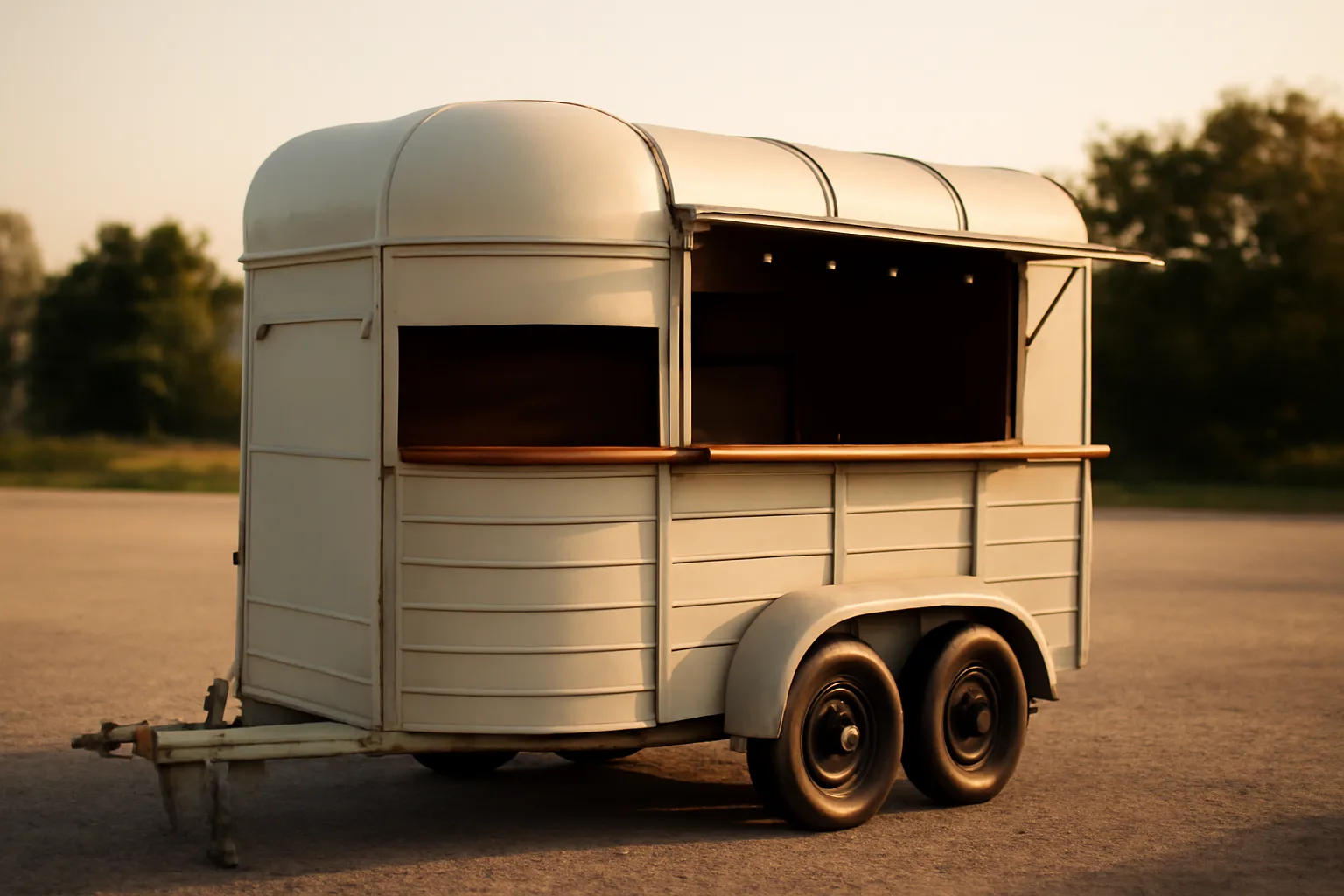
There's no single number here. Anyone who quotes you a flat figure without asking what state you're in is guessing. Mobile bars (the trailers, converted horse trailers, vintage campers, and tap trucks you see at weddings and festivals) almost never operate under a standalone "mobile bar license." Instead they operate under a caterer's permit, a special event permit, or in some cases a full on-premise retail license held by the mobile bar company, layered with event-specific authorizations for each location they roll up to. That structure is exactly why the cost spread is so wide. A one-off special event permit in some states runs in the low hundreds of dollars. A caterer's license that lets a company serve at unlimited private events over a year can run from several hundred to a few thousand dollars depending on the state. And if your state requires the mobile bar to hold, or partner with someone who holds, a full liquor license tied to a quota system, you could be looking at tens of thousands of dollars just to acquire the license on the secondary market, on top of state fees. The honest answer: budget a wide range, then narrow it fast by calling your state ABC authority (Alcohol Beverage Control) or checking their published fee schedule. TTB, the federal agency, does not license retail servers or mobile bars at all. Federal rules only kick in if you're also manufacturing, importing, or wholesaling alcohol under the Federal Alcohol Administration Act [1]. Your state and often your county or city control the actual license you need to pour a drink out of a trailer.
What license does a mobile bar actually need?
Most mobile bars need one of three things: a caterer's permit, a special event permit, or a full liquor license held by the bar owner or the venue they're partnering with. Which one applies depends entirely on your business model. If you're doing private events only (weddings, corporate parties, private property), a caterer's or catering permit is usually the right fit. Texas has a Caterer's Permit (Type CB) under the Texas Alcoholic Beverage Code, Section 25.13, that authorizes off-premise catered alcohol service for events away from a permit holder's regular licensed premises [2]. If you're doing one public festival or a single ticketed event, you likely need a special event permit, sometimes called a one-day permit or temporary permit, tied to that specific date and location. These are cheaper but only good for the event named on the permit. If your business model has you setting up shop long-term at breweries, wineries, or as a semi-permanent fixture, some states require the actual venue to hold the on-premise license and your mobile bar operates as staff or a contracted vendor under that license, not as an independent licensee. This is common. It's often the cheapest path if you can arrange it, because you're not carrying license costs at all. Check our license types hub for how these categories break down state by state, and see the bar overview for how standard on-premise licensing compares to the mobile setup.
How much is a liquor license in general?
Outside the mobile bar question, liquor license costs for a standard bar or restaurant range enormously. California's ABC publishes original license fees that run from a few hundred dollars for some license types up into several thousand for others, before you even touch the quota-driven resale market [3]. States that cap the number of licenses available (called quota states) drive prices up because operators buy existing licenses from other license holders rather than getting a new one issued by the state. In a non-quota state with straightforward on-premise licensing, you might pay a flat annual or biennial fee set by statute, often in the low thousands. In a quota state like California, where the number of on-sale general licenses is tied to county population under Business and Professions Code Section 23817, buying a license on the open market can run well into six figures depending on the county [4]. New Jersey similarly caps retail consumption licenses per municipality by population formula under N.J.S.A. 33:1-12.14, which has pushed resale prices into the hundreds of thousands in some towns [5]. So when someone asks "how much is a liquor license," the real answer is: it depends whether your state issues them on demand for a set fee, or whether you're buying a scarce asset from someone else. Those are two completely different cost structures. Mobile bars can get caught on either side depending on how the business is set up.
How much is a liquor license in Florida?
Florida uses a quota system for its most common on-premise license, the 4COP (quota) license, which allows sale of beer, wine, and spirits for consumption on-premise. The number of quota licenses available per county is tied to county population under Florida Statutes Section 561.20 and is administered by the Florida Division of Alcoholic Beverages and Tobacco [6]. Because quota licenses are capped, new ones only become available when population growth triggers additional allocations or when the state holds a lottery for new licenses in a county. If no new quota licenses are available in your county, you generally have to buy an existing one from a current holder, and those resale prices vary hugely by county, sometimes into six figures in dense urban counties, much less in low-demand rural ones. Florida also offers non-quota license types that don't require buying into the capped pool. A 2COP license (beer and wine only) is issued directly by the state for a set fee and is not subject to the county quota. This is often the more realistic and affordable path for a mobile bar in Florida if you don't need spirits. For mobile bar operators in Florida specifically, caterer's licenses and special event authorizations exist separately from the quota system, so you may not need a 4COP at all depending on your event model. Confirm current fee schedules and quota availability directly with Florida's ABT before you commit to a county [6]. See our Florida bar guide for county-level detail, and the Florida Bar member search if you're trying to distinguish attorney licensing (a different "bar" entirely) from liquor licensing, which trips up a surprising number of first-time searchers.
How much is a liquor licence in Florida (spelling variant)?
Same answer as above, just a different spelling convention. Florida's system doesn't change based on how you spell "license." The state uses the quota-based 4COP for full liquor, and non-quota options like the 2COP for beer and wine, both administered by the Division of Alcoholic Beverages and Tobacco under Chapter 561 [6]. If you searched this exact phrase because you're comparing US and UK/Commonwealth terminology, know that "licence" (with a c) is the British and Canadian spelling, while the US uses "license." Florida's actual application forms and statutes use the American spelling throughout, so search accordingly on the state's own site to avoid missing the right form.
How do you get a liquor license, step by step?
The process is broadly similar across states even though the names and fees differ. First, confirm which license type fits your business (mobile caterer's permit, special event permit, or full on-premise) with your state ABC authority. Second, check zoning and local approval requirements with your city or county, since many jurisdictions require local sign-off before the state will even accept your application. Third, submit the state application with the required fee, which can include fingerprinting, background checks, and sometimes a public notice or waiting period for objections. Many states also require a federal registration step, but not always the one people assume. If you'll be pouring alcohol you didn't produce, you generally don't need a federal permit from TTB, since TTB governs producers, importers, and wholesalers under the Federal Alcohol Administration Act, not retail servers [1]. But if your mobile bar business ever expands into bottling your own cocktails for sale, that crosses into TTB territory and requires a Basic Permit [7]. Fourth, expect a review period that ranges from a few weeks for a simple caterer's or special event permit to several months for a full on-premise license in a quota state, especially if there's a public comment period or a required local board hearing. Build that timeline into your opening date planning, not after it. If you're planning backward from a signed lease and a set opening date, a structured license roadmap builder can help you sequence local approvals, state filing, and insurance so you're not discovering a six-week gap two weeks before opening. That's the whole reason LiquorReady built a $199 one-time State Liquor License Roadmap: most delays are sequencing problems, not paperwork problems.
How do you obtain a liquor license as a new business?
For a brand-new business, obtaining a license means proving to the state that your business entity exists, your location is zoned correctly, and your operators pass any required background checks, then paying the applicable fee. Requirements typically include a completed application, proof of business formation (LLC or corporation paperwork), a lease or proof of location control, and in many states a local zoning or health department sign-off before the state will issue. For mobile bars specifically, "location" gets complicated since you don't have one fixed address. States handle this differently: some require you to list a home base or commissary address where the mobile unit is stored and serviced, others require you to file location details for each individual event under your permit. Ask your state ABC authority how they define your business location for licensing purposes before you fill anything out, because getting this wrong can mean resubmitting the whole application. Most states also require liquor liability insurance (sometimes called dram shop coverage) as a condition of issuance or renewal, and event venues will often require proof of it regardless of what the state mandates.
Can you serve alcohol without a liquor license?
No, not commercially. Serving alcohol for sale, or as part of a paid service like a mobile bar at a ticketed or client-paid event, without the required state and local license is illegal in every US state and can carry civil penalties, criminal charges, and loss of any future licensing eligibility. Even "free" alcohol service at a private event can require a permit if money changes hands anywhere in the arrangement (a bartending fee, an event package price that includes alcohol, a cash bar). There are narrow exceptions. Fully private, non-commercial gatherings where a host serves their own alcohol to invited guests with no payment involved generally don't require a license, because no sale is occurring. But the moment your mobile bar business is paid to show up and pour drinks, whether the client bought the liquor or you did, you are almost certainly in licensed-activity territory under your state's alcoholic beverage code. Check your specific state code section on unlicensed sale or service, since penalty structures and exact definitions of "sale" vary.
How do you get a bartending license, and is that the same thing?
A bartending license is not the same as a liquor license, and mixing these up is one of the most common mistakes new mobile bar owners make. A liquor license is issued to the business (or in some states, to the specific location or event) and authorizes the sale of alcohol. A bartending license, more accurately called a certification or permit depending on the state, is issued to the individual person pouring the drinks and typically comes from completing a responsible beverage service (RBS) training course. Some states legally require individual bartender certification (sometimes tied to a specific program like TIPS or a state-run RBS course) before someone can serve alcohol at all, regardless of who holds the business liquor license. Other states don't mandate individual certification but strongly encourage it, and insurers frequently require it as a condition of liquor liability coverage. For a mobile bar, this means two separate compliance tracks: the business needs its permit or license to operate, and each bartender working events may need their own certification depending on state law. Confirm your state's specific requirement with your ABC authority, since "how to get bartending license" and "how to get a liquor license" are genuinely different questions with different answers.
How can I get a liquor license faster or cheaper?
Faster and cheaper usually pull in opposite directions, so pick your priority first. The fastest path for most mobile bars is a special event permit or caterer's permit rather than a full on-premise license, since these typically involve shorter review windows and lower fees than a quota-restricted retail license. The cheapest path, if your business model allows it, is operating under a venue's existing license as a contracted vendor rather than holding your own license at all. This only works if you're consistently working the same venues and they're willing to structure the arrangement that way, and it comes with real limits on where and how independently you can operate. If you do need your own license and you're in a quota state, watch for lottery windows or new-license release periods, since buying an existing license on the secondary market is almost always the most expensive option. States sometimes release new quota licenses tied to population growth, and getting one directly from the state at the statutory fee is dramatically cheaper than buying one from an existing holder [4][6]. Ask your ABC authority whether any new licenses are scheduled for release in your target county before assuming you have to buy on the resale market.
Can anyone take the bar exam?
This question shows up in liquor license searches because of the shared word "bar," but it's about a completely different thing: the legal profession's licensing exam for attorneys, not alcohol licensing. Eligibility to sit for a state bar exam is set by each state's bar admission authority and generally requires graduation from an ABA-accredited law school (or, in a few states, an alternative path like law office study), plus passing a character and fitness review [8]. If you landed here because you're researching how to legally run a mobile bar business (the drinks kind), you don't need to pass any bar exam. That requirement applies only to practicing law. If you're actually researching the legal profession, the Florida Bar member search tool is the right resource, and it has nothing to do with alcohol licensing despite the name overlap.
What actually drives the cost up or down for a mobile bar license?
| Special event permit | Per-event fee, low cost | Fastest, weeks |
|---|---|---|
| Caterer's/catering permit | Annual fee, moderate cost | Moderate, weeks to months |
| Full on-premise (non-quota state) | Flat statutory fee | Moderate, months |
| Full on-premise (quota state) | Market price of existing license | Slowest, can be months to years |
Three factors move the price more than anything else: your state's licensing structure, your event frequency, and whether you need spirits or just beer and wine. Quota states with capped license numbers push costs up dramatically compared to states that issue on demand for a flat statutory fee [4][5]. Event frequency matters too. A single special event permit priced for a one-day festival costs far less than an annual caterer's permit meant to cover dozens of private events, but if you're doing 30+ events a year, paying per-event adds up fast and the annual permit usually wins on total cost even if the sticker price looks bigger upfront. Beer-and-wine-only licenses (like Florida's 2COP) are consistently cheaper and faster to get than full liquor licenses that include spirits. If your mobile bar concept can work as a beer and wine or even a beer, wine, and pre-batched cocktail setup using someone else's spirits license, you may be able to skip the expensive tier entirely. Ask this question early, before you build a menu that locks you into needing full liquor authority. | Path | Typical cost driver | Speed |
Frequently asked questions
How much is a liquor license?
It ranges from a few hundred dollars for a special event permit to well over $100,000 for a full on-premise license in a quota state where you must buy from an existing holder. Non-quota states typically charge a flat statutory fee, often in the low thousands. Confirm the exact figure with your state ABC authority, since fees and quota status change.
How do I get a bartending license?
You typically complete a state-recognized responsible beverage service (RBS) training course, sometimes a specific program like TIPS, and receive individual certification. This is separate from your business's liquor license. Requirements vary by state, so check whether your state legally mandates individual server certification or only recommends it for insurance purposes.
How can I get a liquor license for my mobile bar?
Start by confirming with your state ABC authority whether your business model fits a caterer's permit, special event permit, or full on-premise license. Then check local zoning, submit the state application with required fees and background checks, and secure liquor liability insurance, since most states or venues require it before you can operate.
How do I get a liquor license if my state uses a quota system?
In quota states, new licenses are only issued when population growth triggers additional allocations or through a state-run lottery. If none are available in your county, you generally must buy an existing license from a current holder on the resale market, which can cost significantly more than the state's original issuance fee.
How do I obtain a liquor license as an out-of-state mobile bar operator?
Most states require you to register your business entity in-state or as a foreign entity authorized to do business there, then apply for the same license types available to local operators. Some states add extra requirements for out-of-state applicants, so confirm directly with the ABC authority in the state where you'll be operating events.
Can anyone take the bar exam?
No. Bar exam eligibility is set by each state's bar admission authority and generally requires graduation from an ABA-accredited law school (with limited alternative paths in a few states) plus a character and fitness review. This is unrelated to alcohol licensing; it governs who can practice law.
How do I obtain a liquor licence (UK/Commonwealth spelling)?
The process is essentially the same as in the US, but jurisdiction matters. UK and Commonwealth alcohol licensing runs through different agencies entirely (in England and Wales, local licensing authorities under the Licensing Act). US mobile bar operators should ignore UK-specific guidance and check their own state's ABC authority instead.
How much is a liquor license in Florida?
Florida's quota-based 4COP license (full liquor) varies by county based on population and resale market conditions, sometimes reaching into six figures in dense counties. Florida's non-quota 2COP license (beer and wine only) is issued directly by the state at a set fee and is typically far cheaper. Confirm current numbers with Florida's Division of Alcoholic Beverages and Tobacco.
How much is a liquor licence in Florida (alternate spelling)?
Same system, same answer, different spelling. Florida issues quota-capped 4COP licenses for full liquor and non-quota 2COP licenses for beer and wine, both through the Division of Alcoholic Beverages and Tobacco. Search Florida's official forms using the American spelling "license" since that's what the state's application documents use.
Can you serve alcohol without a liquor license?
Not commercially. Any paid alcohol service, including mobile bar events where a client pays for the service or package, requires the applicable state and local license. Truly private, non-commercial hosting with no sale involved is generally exempt, but paid mobile bar work almost always falls under licensed-activity rules.
Does a mobile bar need a different license for every state it works in?
Yes, in almost every case. Liquor licensing is state and often county or city specific, so a mobile bar that works events across state lines typically needs separate permits or licenses in each state, sometimes each county, where it operates. There's no federal license that covers retail alcohol service nationwide.
What's the difference between a caterer's permit and a special event permit for a mobile bar?
A caterer's permit generally covers a business for a full year or licensing period across many private events, while a special event permit is issued for one specific date and location, often a public festival or ticketed event. Caterer's permits usually cost more upfront but work out cheaper if you're doing high event volume.
Sources
- Federal Alcohol Administration Act, 27 U.S.C. Section 203: TTB governs producers, importers, and wholesalers through Basic Permit requirements, not retail servers or mobile bar operators
- 27 CFR Part 1, Basic Permit Requirements: Federal Basic Permits are required for production, importing, or wholesaling, not retail alcohol service
- Texas Alcoholic Beverage Code, Section 25.13, Caterer's Permit: Texas Caterer's Permit (Type CB) authorizes off-premise catered alcohol service
- New York Alcoholic Beverage Control Law, Section 63-a, Catering Establishment Permit: New York issues a Catering Establishment permit for temporary or per-function alcohol service
- California Department of Alcoholic Beverage Control, license fees schedule: State liquor license application and issuance fees vary widely by license type
- California Business and Professions Code Section 23817: California caps on-sale general license count per county based on population ratio
- New Jersey Statutes N.J.S.A. 33:1-12.14: New Jersey caps retail consumption licenses per municipality by population formula
- Florida Statutes Section 561.20, License Limitations: Florida's 4COP license is quota-limited by county population while 2COP is a non-quota beer/wine license
- American Bar Association, Comprehensive Guide to Bar Admission Requirements: Bar exam eligibility generally requires graduation from an ABA-accredited law school and a character and fitness review